

Three years.
Three years of meetings.
Three years of pitches.
Three years of fundraising.
Three years of trademark applications.
Three years of lawyers.
Three years of hearing the word “no” dressed up as feedback.
And lately I’ve started asking myself a question I never thought I would ask.
What if ordinary people don’t stand a chance anymore?
Not because they lack ideas.
Not because they lack passion.
Not because they aren’t willing to work.
But because the system itself has become almost impossible to navigate.
Over the last three years I have sat through hundreds of conversations.
Investors asking for traction.
Supporters asking for proof.
Consultants asking for consultants.
Lawyers asking for lawyers.
Everyone asking questions.
Very few offering solutions.
I’ve had meetings where people never turned up.
Meetings where they arrived late and spent most of the time looking at their phones.
Meetings where they loved the vision, loved the history, loved the concept, then disappeared forever.
I’ve been told to tone it down.
Tone down the ambition.
Tone down the message.
Tone down the criticism.
Tone down the belief that football should belong to supporters.
The irony is that nobody ever tells the corporations to tone it down.
Only the people trying to challenge them.
One of the strangest parts has been the obsession with credentials.
People ask what university I attended.
The answer is simple.
I didn’t.
I left school at fifteen.
I’m dyslexic.
I learned by doing.
I’ve built businesses.
I’ve represented footballers.
I’ve negotiated deals.
I’ve won.
I’ve lost.
I’ve made mistakes.
I’ve survived.
Apparently none of that fits neatly into the boxes some people want to tick.
So they keep asking where I studied.
As if a certificate matters more than what you’ve actually done.
Then there are the trademarks.
Four years.
Four years waiting for applications.
Four years dealing with objections, delays, bureaucracy and endless paperwork.
At times it has felt like protecting the idea has become harder than building the idea.
Governments tell entrepreneurs to innovate.
Then make them wait years to protect what they create.
You begin to wonder whether the system is designed to help builders or simply exhaust them.
The fundraising process has been equally revealing.
Everyone says they want fan ownership.
Everyone says football should belong to supporters.
Everyone says the game needs alternatives.
Then the first question arrives.
“How much have you raised already?”
Think about that for a second.
The people with money often want to invest after somebody else has taken the risk.
The crowd wants momentum.
The institutions want proof.
The proof requires investment.
The investment requires proof.
Round and round it goes.
At one point I even brought in a fractional CFO to explain the numbers because people kept questioning the financials.
The response?
More questions.
More caution.
More hesitation.
The truth is that ordinary people raise money differently.
They do not have billionaire friends.
They do not have venture capital firms on speed dial.
They do not have family offices writing six-figure cheques.
They have belief.
They have community.
They have persistence.
Those things move slower.
Much slower.
Crowdfunding has taught me that.
Real people invest fifty dollars.
One hundred dollars.
Maybe two hundred dollars.
Not because they don’t care.
Because they have mortgages.
Children.
Bills.
Lives.
Building something with ordinary people is harder.
But it is also more honest.
Then there are the trolls.
I’ve watched people spend years obsessing over my failure.
Writing articles.
Posting comments.
Sharing rumours.
Monitoring every move.
Celebrating every setback.
Some people are more committed to watching a project fail than building one themselves.
It’s bizarre.
But perhaps they need the failure.
Because if somebody ordinary succeeds, uncomfortable questions start appearing.
What excuses disappear?
What limitations were real?
What stories were we telling ourselves?
The legal system has been another education.
Nothing prepared me for being sued in New York over what began as an incomplete T-shirt transaction.
The numbers eventually became so absurd that it fundamentally changed how I look at the legal environment entrepreneurs operate in.
When somebody can threaten tens of millions of dollars over something that should never have reached those numbers, you begin to understand why so many people stop trying.
The process becomes the punishment.
Not the outcome.
The process.
That experience made me more conscious of how fragile innovation can be when it collides with institutions that possess unlimited resources.
Yet despite all of this, I’m still here.
The project has changed.
The vision has become simpler.
Not bigger.
Smaller.
Sharper.
More focused.
For a long time the ambition was broad.
Multiple clubs.
Multiple markets.
A larger football movement.
Today the focus is clearer.
One club.
One city.
One story.
The plan now is not theory.
The Wefunder campaign is live.
That changes everything.
For three years, I have been asking institutions for permission.
Now I am asking the people of Los Angeles a simpler question.
Do you want this club back?
Not as a corporate franchise.
Not as another sterile football product.
As something built with supporters from day one.
The new plan is brutally focused.
We use Wefunder to prove demand in public.
Every supporter who joins becomes part of the evidence.
Every investment becomes a vote.
Every share becomes a signal to city leaders, media partners, sponsors and football people that this is not just my idea.
It is a movement.
The next step is to find the right city partner inside Greater Los Angeles.
A city that understands the opportunity.
A city that wants football, culture, youth development, community ownership and global attention ahead of the 2026 World Cup.
A city that sees what others have missed.
Greater Los Angeles has more than twenty million people.
It is one of the most diverse football regions on Earth.
One of the largest Latino communities in North America.
One of the great entertainment capitals of the world.
One of the great sporting cities in the world.
Yet millions of people still have no club that truly represents them.
No supporter-owned alternative.
No community-built institution.
No modern club connected to one of the most fascinating stories in football history.
The Los Angeles Aztecs matter because history matters.
Not nostalgia.
History.
There is a difference.
The Aztecs weren’t just another football team.
They were a cultural phenomenon.
Johan Cruyff played for the club.
George Best played for the club.
Some of the most creative footballers ever to lace up a pair of boots played for the club.
And here’s the remarkable thing.
They would still be the players people paid to watch today.
Not because they were perfect.
Because they were creative.
Because they took risks.
Because they entertained.
Because they made people feel something.
Modern football has become many things.
Efficient.
Professional.
Data-driven.
Commercially successful.
But somewhere along the way it became a little less entertaining.
A little less rebellious.
A little less human.
The Los Angeles Aztecs are not an attempt to escape the future.
They are an attempt to bring some of those lost qualities into the future.
Football should entertain.
Football should take risks.
Football should belong to supporters.
Football should have characters.
Football should have soul.
The Los Angeles Aztecs are not simply a football club.
They are a test.
A test of whether ordinary people can still build extraordinary things together.
So this is the execution plan.
Grow the Wefunder.
Build the supporter base.
Secure the trademark position.
Find the city partner.
Create the home base.
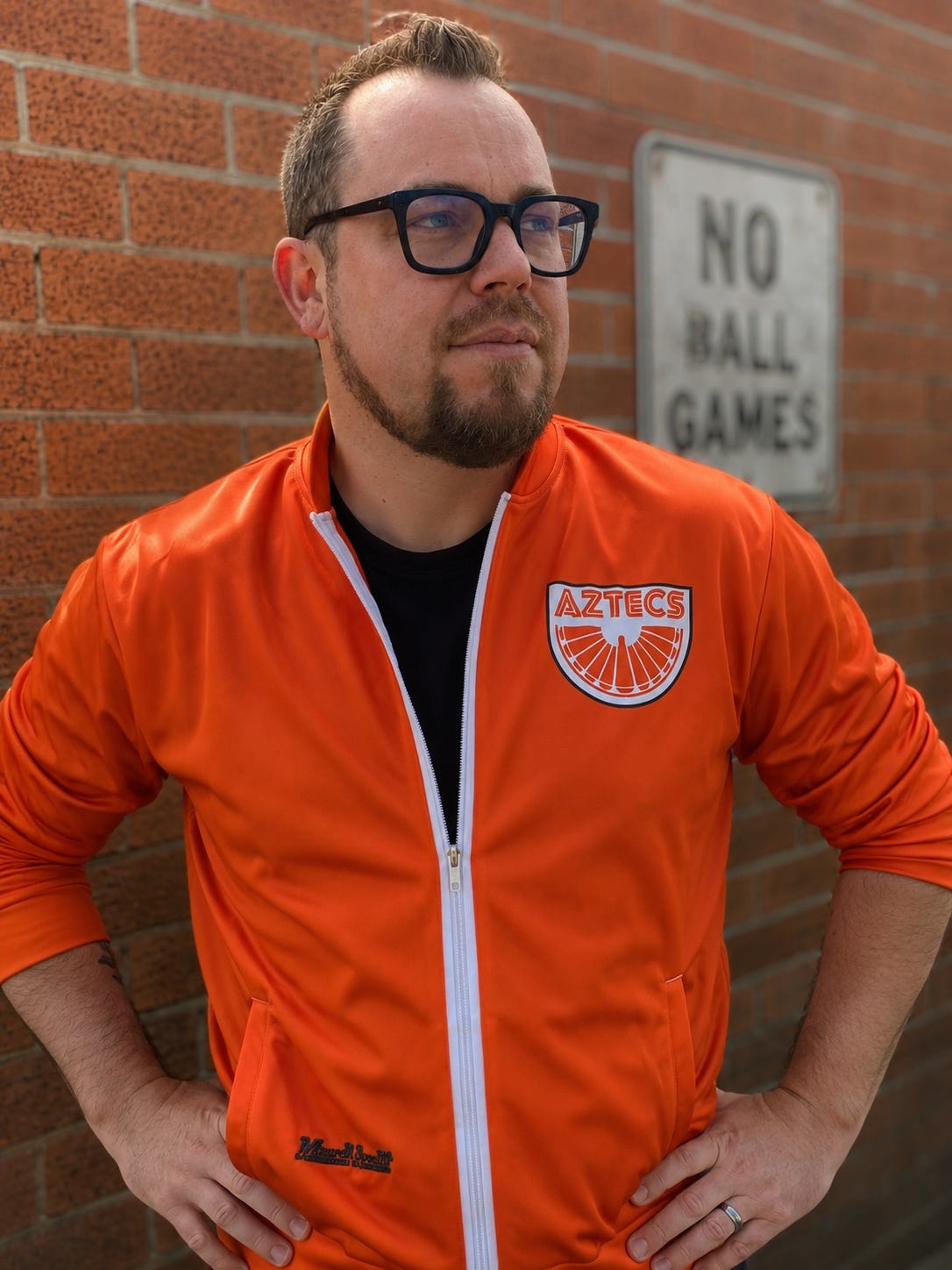
Launch the heritage kit.
Hold the first Aztecs assembly.
Build toward the first fixture.
No more waiting for gatekeepers to bless the idea.
The people can decide.
If Los Angeles wants the Aztecs back, then let Los Angeles prove it.
And if the crowd moves first, the institutions will follow.
They always do.
Maybe it succeeds.
Maybe it fails.
I honestly don’t know anymore.
Three years ago I was certain.
Today I am less certain.
But uncertainty is not surrender.
Because if people like me stop trying, who exactly is left?
The consultants?
The corporations?
The algorithms?
The spreadsheets?
Someone has to fight for the idea that football belongs to people.
Someone has to believe history still matters.
Someone has to be willing to look foolish.
Someone has to go first.
Nobody is coming to do this for us.
So we’re going to try anyway.