

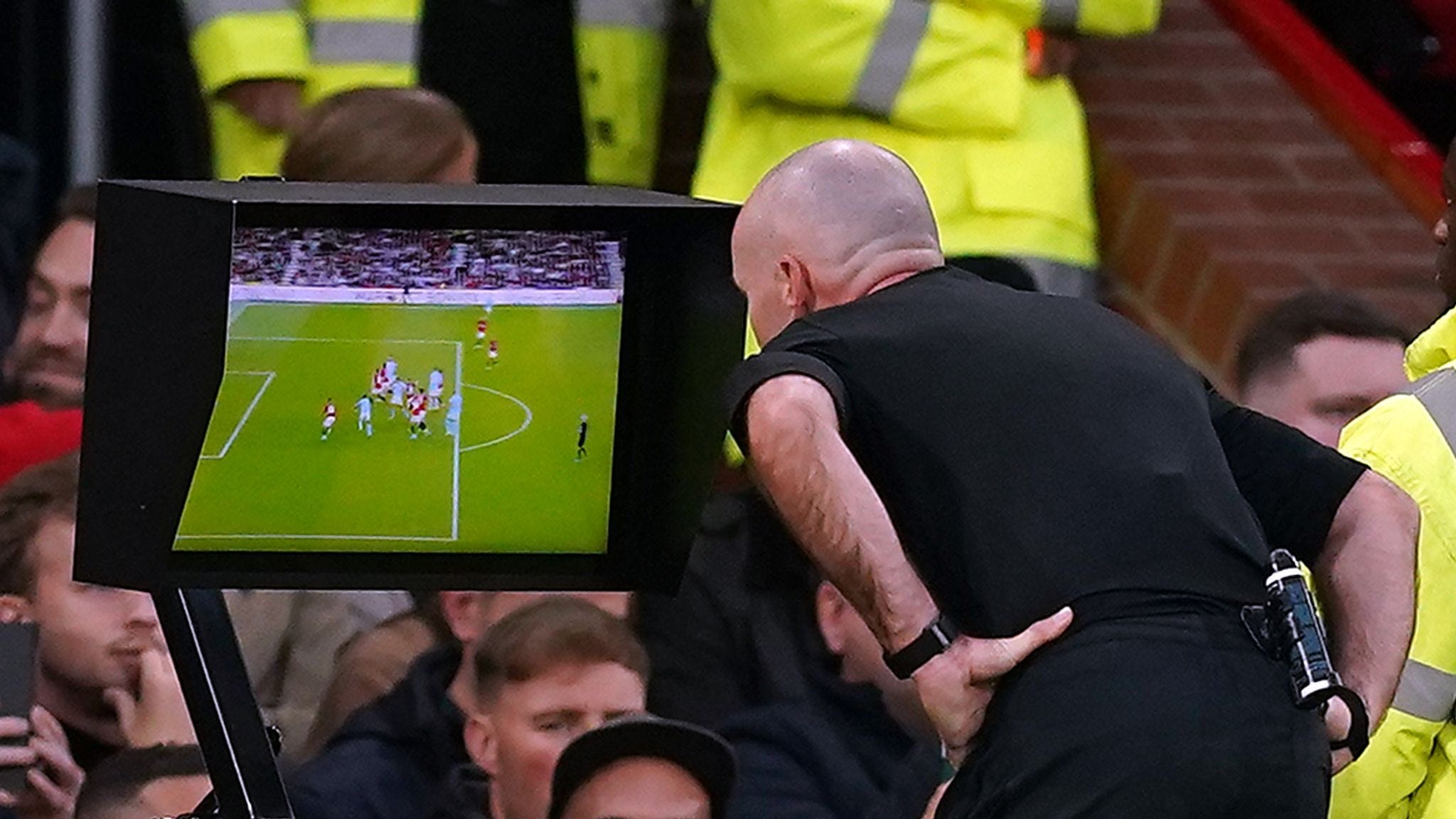
There used to be a moment in football that belonged only to the people inside the ground.
The ball hit the net.
For half a second there was silence.
Then noise. Pure noise. Arms in the air. Strangers hugging. Beer flying. A week’s worth of life released in one instant.
No confirmation needed. No delay. No permission.
That moment was football.
Now it comes with doubt.
And if anyone needed reminding why this debate refuses to disappear, they only had to watch Liverpool against Manchester City last night.
A goal celebrated. Then checked. Then rechecked. A red card decision arriving after delay. Players waiting. Fans waiting. Momentum gone while the game searched for certainty. And when the decision finally came, half the stadium still felt it was wrong.
That is the VAR era in one sequence.
Not clarity. Not acceptance. Just longer arguments.
Football Was Never Built For Certainty
Football worked for more than a century because everyone accepted the same truth.
The referee might get it wrong.
That wasn’t a flaw. It was part of the human contract of the game. Decisions were immediate. Emotion was uninterrupted. Responsibility was visible.
You won some. You lost some. The game moved on.
Then football became a global entertainment industry worth billions. And mistakes stopped being mistakes. They became financial risks.
A wrong decision could mean lost Champions League revenue. Lost sponsorship exposure. Lost broadcast narratives. Millions moving in the wrong direction because of a human call.
So football tried to remove uncertainty.
The problem is that football itself is built on uncertainty.
You cannot engineer chaos out of a chaotic sport without changing its soul.
VAR Didn’t Remove Subjectivity. It Slowed It Down.
Most football decisions are not factual.
They involve interpretation. Intent. Force. Natural movement. Advantage. Context.
Technology can show angles. It cannot remove judgement.
Slow motion exaggerates contact. Freeze frames remove context. A challenge that looks natural at full speed looks criminal when paused.
So the game waits longer, but arguments remain exactly the same.
Last night’s match proved it again. Even after multiple reviews, the debate didn’t disappear. It multiplied.
VAR didn’t eliminate controversy.
It industrialised it.
The Referee Lost Authority
This is the real damage.
The referee used to be the judge. Not perfect, but decisive. Authority and responsibility lived in the same place.
Now authority is split.
The referee makes the call.
VAR reviews it.
Protocol decides whether it changes.
Nobody fully owns the outcome.
Players appeal to screens instead of officials. Fans argue with processes instead of people. Referees hesitate because the system tells everyone their decision is provisional.
You could see it last night. Players waiting for confirmation rather than accepting the decision. The referee standing between the pitch and the process.
Technology was supposed to support referees. Instead, it made them look weaker.
Why The System Wanted VAR
This is the part rarely said openly.
VAR was not introduced because fans demanded it.
It arrived because modern football became afraid of looking wrong.
Broadcasters wanted fewer headline controversies. Governing bodies wanted decisions that could be defended on replay. Clubs operating at the highest financial level wanted fewer seasons decided by human error.
The pressure did not come from the bottom of football.
The higher the stakes, the louder the demand for certainty. When league positions are worth tens of millions, randomness becomes unacceptable.
So the system moved toward control.
Not out of conspiracy. Out of economics.
Football tried to make itself safe.
The Championship Feeling
You hear Championship supporters joke that they don’t want promotion because they don’t want VAR.
Of course they want promotion. Success still matters.
What they fear losing is something harder to measure.
In leagues without VAR, goals still count immediately. Referees still own decisions. Arguments end with the final whistle.
In the Premier League, emotion is interrupted. Celebration becomes conditional.
The higher football climbs financially, the more it feels designed for television rather than for the people inside the ground.
Fans don’t hate fairness.
They hate waiting eight minutes to still feel unsure.
Fans Never Asked For Perfection
This is where football misunderstood itself.
Fans don’t demand perfect decisions. They demand clarity and honesty.
A wrong decision made instantly feels human.
A delayed decision that still feels wrong feels engineered.
That’s why frustration has grown even as accuracy supposedly improved.
Football didn’t lose mistakes. It lost immediacy.
And immediacy is where emotion lives.
Technology Isn’t The Enemy
This isn’t an argument against progress.
Technology in football can work. Goal-line technology works because it is instant, factual, invisible. It supports the referee without replacing them.
VAR crossed the line when it moved authority away from the pitch.
Technology should provide evidence. The referee should remain the decision-maker. Authority and responsibility must live together or trust disappears.
The solution is not complicated:
Short reviews.
Factual decisions only.
Referees making final calls.
Clear communication with fans.
Technology assisting football, not dominating it.
The Question Football Cannot Avoid
What is the game trying to protect?
A system that never looks wrong on television?
Or a sport that still feels alive in the stadium?
Right now, football protects the system.
But football did not become global because it was technically correct. It became global because it was human.
Fans will forgive mistakes.
They will not forgive a game that feels controlled.
Football survived wrong decisions for 150 years because the moments were real.
If the game keeps removing those moments in search of certainty, it may discover too late that accuracy was never the point.
Football was never meant to be reviewed frame by frame.
It was meant to be felt.