

This is pissing me off.
Not because countries should not have borders.
They should.
Not because security does not matter.
It does.
But because football keeps selling ordinary people a dream and then acting surprised when those same people get crushed by the machinery built around it.
The World Cup is supposed to be football’s greatest celebration.
The month when the world comes together.
Flags replace politics.
Songs replace arguments.
Football replaces everything.
At least that is the story FIFA sells.
The reality is starting to look very different.
Because before a ball has even been kicked, supporters are already discovering something uncomfortable.
Getting a World Cup ticket is one thing.
Getting through the door is another.
Scottish supporters have spoken publicly about ESTA authorisations being approved and then thrown back into uncertainty.
Moroccan media has reported supporters losing thousands after visa refusals despite already booking hotels and travel.
Across the football world there are growing concerns about visa delays, border checks, travel uncertainty and fans spending money before they have certainty.
That should concern everyone.
Because football fans are not buying a train ticket to Blackpool.
They are buying a dream.
Flights.
Hotels.
Tickets.
Insurance.
Car hire.
Food.
Time off work.
Savings built over years.
For many people, it is the biggest sporting trip of their lives.
And increasingly, the risk sits entirely with them.
If the trip goes wrong, FIFA still gets paid.
The airlines still get paid.
The hotels still get paid.
The sponsors still get their logos on television.
The fan gets the loss.
That is not football.
That is extraction with a match ball.
And then came the story that should have embarrassed everybody involved.
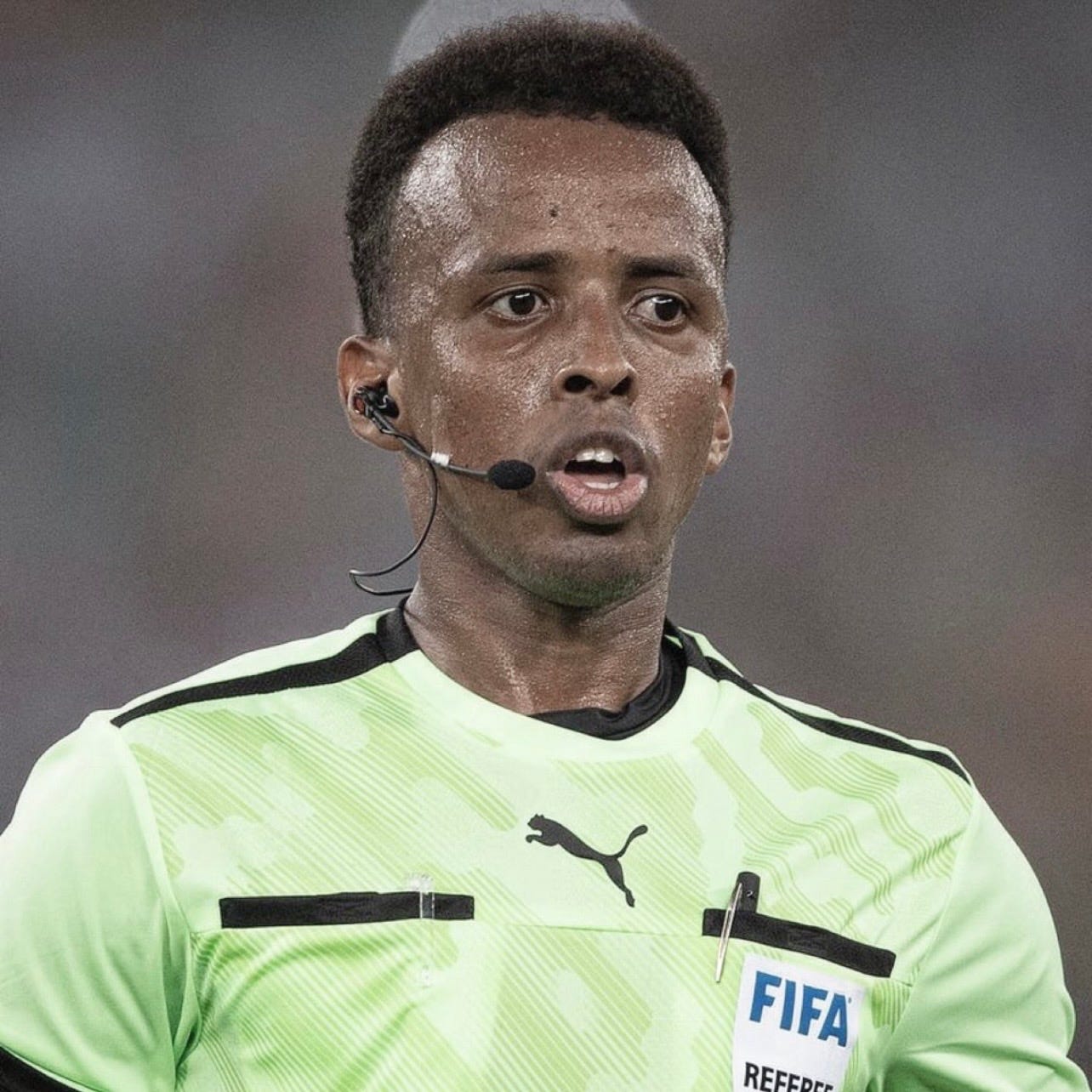
Omar Abdulkadir Artan.
A FIFA-appointed referee.
A man selected on merit.
A man set to become the first Somali referee in World Cup history.
He travelled to the United States.
He was denied entry.
He was sent home.
Think about that.
A FIFA referee selected by FIFA could not enter a FIFA World Cup.
That sentence should have caused panic inside FIFA headquarters.
Instead, the machine carried on.
The reported explanation is that FIFA’s referees are operating from a central training and logistics hub in Miami.
That matters.
Because it means Artan was not simply blocked from refereeing in the United States. He was blocked from the entire tournament because FIFA’s own structure placed the referee operation inside the country that denied him entry.
That is the governance failure.
FIFA did not just run into an immigration problem.
FIFA designed a system with no visible escape route when that immigration problem arrived.
A three-country World Cup should not have a one-country bottleneck.
If Canada and Mexico are genuine co-hosts, not decorative flags on a press release, then the tournament should have been built with proper operational alternatives.
Officials should have had regional pathways.
Matches in Mexico should not depend entirely on clearance through Miami.
Matches in Canada should not depend entirely on a U.S. border decision.
That is not anti-American.
That is basic tournament planning.
When FIFA sells the World Cup as global, it cannot organise it like everyone must first pass through one gatekeeper.
The thing that annoys me most is that I know what tournament football used to feel like.
Years ago I went to Portugal for the Euros.
Flights were a couple of hundred quid.
My hotel was around €75 a night.
Pints were three or four euros.
I could not justify spending around £300 for an England ticket, so I watched games in public fan zones and parks full of England supporters.
And it was brilliant.
Nobody cared where you were watching.
Nobody cared whether you were in hospitality.
Nobody cared whether you had a premium package.
You were there.
That was enough.
Football was everywhere.
The streets were full.
The bars were full.
The squares were full.
The atmosphere was electric.
I ended up staying an extra week because Lisbon had that tournament magic. That feeling where the game spills out of the stadium and belongs to everyone. You did not need permission from a corporate tier. You did not need to be rich. You just had to turn up and care.
On the flight home I even chatted to Chris Kamara.
He told me it was one of the best tournaments he had ever attended.
And he was right.
Because tournaments used to feel open.
Accessible.
Human.
You felt invited.
Today it feels different.
Everything feels bigger.
More expensive.
More corporate.
More controlled.
More complicated.
The fan has become the last person considered.
The supporter is treated like a customer.
The customer is treated like a risk.
The risk is managed through policy.
And somewhere along the line football lost part of its soul.
This is not an attack on ordinary Americans.
Far from it.
Most Americans I have met are warm, welcoming and generous people.
The America of diners, road trips, sports bars and backyard barbecues still exists.
The people are not the issue.
The issue is policy.
The issue is bureaucracy.
The issue is a political system that increasingly makes America look suspicious of the very world it is trying to host.
And perception matters.
Whether people like it or not, the World Cup is a global advertisement.
Every supporter who arrives goes home with a story.
Every delayed visa becomes a story.
Every ESTA problem becomes a story.
Every supporter who loses thousands becomes a story.
Every referee sent home becomes a story.
And those stories shape how the world sees a country.
The uncomfortable reality is that America’s reputation has taken a hit internationally over recent years.
Not because people dislike Americans.
Most do not.
But because people increasingly question decisions made by the American government.
The World Cup was supposed to be an opportunity to remind the world of America’s strengths.
Instead, there is a risk that bureaucracy becomes part of the story.
And football should not ignore that.
Neither should FIFA.
Because FIFA has become very good at talking about unity.
Very good at talking about inclusion.
Very good at talking about bringing the world together.
But when fans face uncertainty, where is the protection?
Where is the fan-first policy?
Where is the contingency planning?
Where is the accountability?
Where is the voice for the supporter?
The answer increasingly feels like nowhere.
And that takes us to a bigger problem.
People are losing faith in institutions.
Not just football institutions.
All institutions.
Many people no longer believe they have a meaningful voice.
In America, voters are effectively offered two giant political machines.
Choose red.
Choose blue.
Then watch the same structures continue operating.
Britain has similar problems.
Europe has similar problems.
This is not an anti-American point.
It is a systems point.
Across the West, ordinary people are being managed more than represented.
Football has copied the same disease.
Fans are told the game belongs to them.
Ticket prices rise.
Broadcast packages multiply.
Sponsors gain influence.
Travel costs explode.
Supporters get processed.
That is not participation.
That is managed consent.
The irony is that football was always supposed to be the escape from all this.
The one thing that cut through politics.
The one thing that connected people.
A supporter in Glasgow.
A father in Casablanca.
A referee in Mogadishu.
A family in Mexico City.
A kid kicking a ball in Preston.
All connected by the same game.
That is the magic.
But bureaucracy kills magic.
Corporate systems kill magic.
And when fans start feeling like customers trapped inside a giant machine, football loses something it cannot buy back.
Soul.
That is the danger.
Not one referee.
Not one ESTA.
Not one visa refusal.
The danger is that football keeps getting bigger while the people inside it feel smaller.
The World Cup should be simple.
Come.
Watch football.
Meet people.
Sing songs.
Make memories.
Go home with stories.
That should be the deal.
Instead, too many people are wondering whether they will even get through the door.
And that is why this matters.
Because the World Cup does not belong to FIFA.
It does not belong to politicians.
It does not belong to border agencies.
It does not belong to sponsors.
It belongs to the people who save for years to be there.
The people who travel.
The people who sing.
The people who care.
And if those people are being locked out, delayed, ignored, or treated as an afterthought, then football has a problem.
Not a PR problem.
Not a branding problem.
A soul problem.
And yes.
That is pissing me off.