

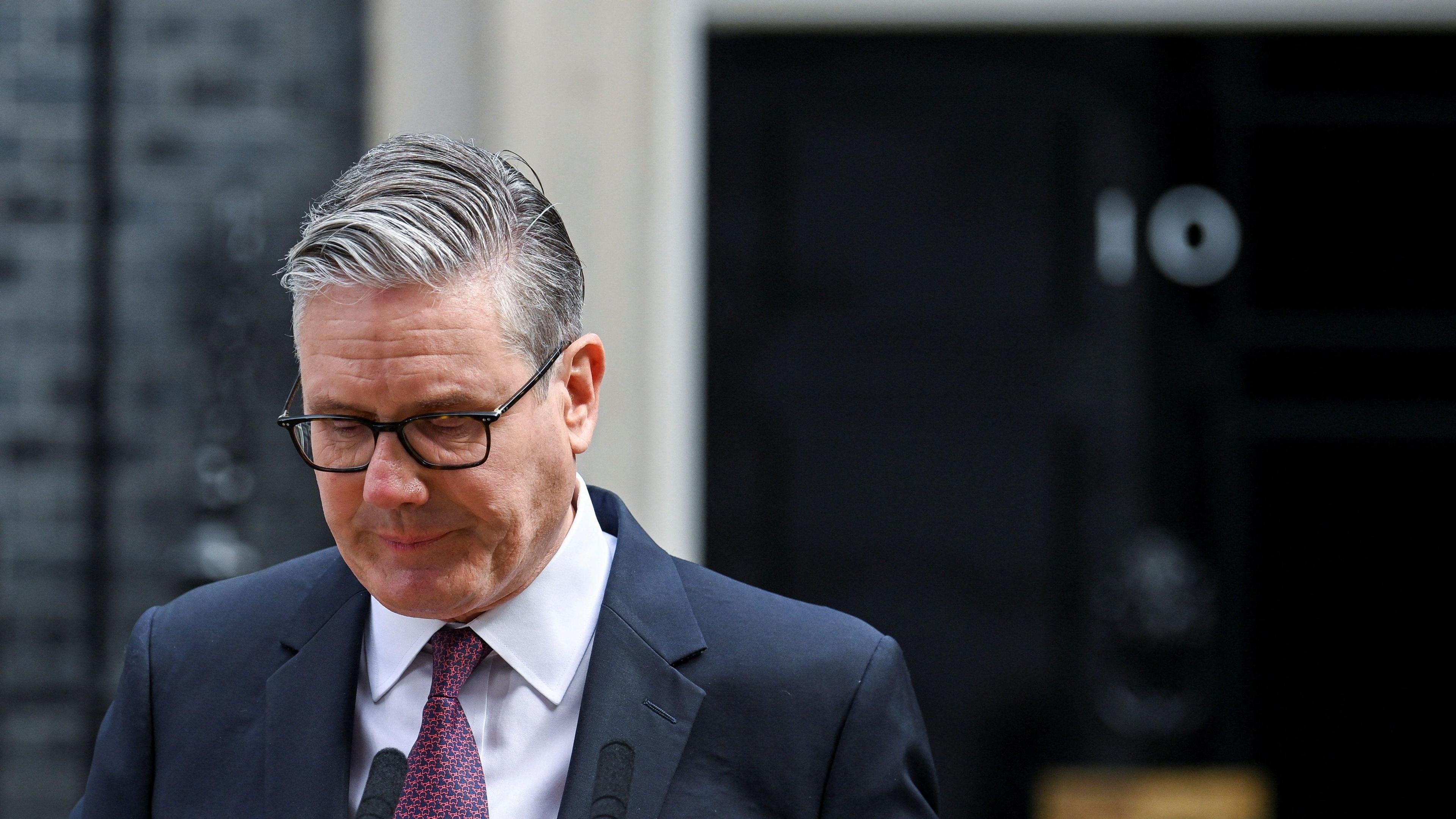
Keir Starmer is leaving.
The newspapers will call it a leadership crisis.
They are wrong.
This is a trust crisis.
A fairness crisis.
A class crisis.
A national confidence crisis.
Because the real story is not that Keir Starmer failed.
The real story is that millions of ordinary people looked at Labour, looked at the Conservatives, looked at Westminster, and asked the same brutal question.
Who is actually on our side?
Not in a speech.
Not in a manifesto.
In real life.
When the council tax bill lands.
When the rent goes up.
When Universal Credit does not stretch.
When the high street dies.
When food banks become normal.
That is the Britain politicians keep trying not to see.
They talk about growth.
People talk about survival.
They talk about fiscal rules.
People talk about gas bills.
They talk about aspiration.
People talk about whether their kids will ever own a home.
That gap is where trust went to die.
Labour’s problem is not just Starmer.
Labour’s problem is that it still wants to sound like the party of working people while often behaving like the party of institutional caution.
It talks about fairness, then refuses to properly confront wealth.
It talks about ordinary families, then allows council tax to keep rising.
It talks about dignity, then leaves people fighting through a benefits system that too often feels designed to exhaust them.
So let’s put receipts on the table.
In England, the average Band D council tax for 2026 to 2027 is £2,392, up £111, or 4.9%.
Universal Credit for a single person aged 25 or over is £424.90 a month.
Trussell food banks provided more than 2.6 million emergency food parcels across the UK in 2025.
The UK unemployment rate was 4.9% in the three months to April 2026, while job vacancies fell to their lowest level in five years.
This is not a small wobble.
This is the lived economy.
This is the country beneath the press conferences.
So let’s ask the question plainly.
Why is Labour not taxing wealth properly?
Why is work taxed so heavily while assets are protected?
Why are small business owners, workers, renters and families carrying so much of the load?
Why do billionaires exist in a country where food banks are treated as part of the social infrastructure?
Why are councils forced to squeeze households harder every year while local services still feel worse?
Why is Universal Credit still so low that many people cannot live with dignity?
Why is unemployment high enough to frighten families but not high enough to frighten Westminster?
This is not left versus right.
That argument is tired.
This is protected versus exposed.
Asset owners versus workers.
Insiders versus outsiders.
People with access versus people with bills.
People who extract value versus people who create it.
Britain has become a country where owning the right thing matters more than doing the right thing.
Own property and you are rewarded.
Own shares and you are rewarded.
Own assets and inflation can work for you.
Work full time and you are taxed before the money even reaches your hand.
That is the deal millions of people are waking up to.
And they are not stupid.
They know the game is rigged.
They might not use academic language.
They might not quote economic papers.
But they know when the system is taking the mick.
They feel it in their bank account, at Tesco, at the petrol station, when their adult children cannot move out, and when a full-time wage no longer buys a full-time life.
That is why politics is becoming volatile.
Not because people are mad.
Because people are being squeezed and patronised at the same time.
That is a dangerous combination.
Keir Starmer’s failure was emotional before it was political.
He won an election.
But he never won permission.
He had the CV.
The discipline.
The legal brain.
The safe hands.
But Britain did not need a safe pair of hands.
It needed someone prepared to put their hands on the broken system and say:
This is not good enough.
Instead, too often, Starmer sounded like a man managing a spreadsheet while the country was asking for a fight.
And now Andy Burnham may be next.
I’ll be honest.
I am probably more aligned with Burnham than most politicians.
On community.
On local identity.
On transport.
On football.
On ordinary people needing a bigger voice.
He sounds more human.
He sounds less Westminster.
He seems to understand that politics is not just policy.
It is belonging.
But I do not trust politicians.
Any of them.
Not automatically.
Not because they say the right things.
Not because they sound northern.
Not because they talk about working people.
I have heard people say Burnham is playing a role; that he is good at telling different audiences what they want to hear. I do not know if that is true. But I know this: power finds everyone out.
Every politician looks authentic before the machine owns them. Every politician sounds brave before the donors call. Every politician talks about the people before the advisers start sanding off the edges.
So if Burnham gets the job, the test is simple.
Stay real.
Stay dangerous.
Stay close to the people.
Do not become Starmer with a warmer accent.
Do not use working-class language while protecting middle-class comfort and corporate power.
Because Britain will smell it.
Fast.
The public has changed.
People are tired of being managed.
They want representation.
They want receipts.
They want someone prepared to say that the current model is broken.
Not tweak it.
Not rebrand it.
Not put a nicer speech around it.
Break it open.
But a serious manifesto cannot be a shopping list of every pain in Britain. That is how politics becomes theatre. The target must be sharper.
Three things matter now.
First, tax wealth and extraction properly.
If you earn money by working, you should not be punished harder than someone who gains wealth by simply owning assets. Britain must stop treating labour as the easiest thing to tax and wealth as something too delicate to touch.
Second, make work pay and housing reachable again.
A full-time wage should buy more than survival. Young people need a path to ownership, not a lifetime subscription to landlords. If work does not lead to security, the social contract is broken.
Third, rebuild dignity through benefits, councils and public services.
Universal Credit should not leave people choosing between heating and food. Council tax should not keep rising while local services shrink. Disability support should not feel like a courtroom. Public services should not make people feel small.
That is the line.
Tax extraction.
Reward work.
Restore dignity.
Everything else flows from that.
The public can handle hard truths. What they cannot handle is being lied to by people who have never lived the consequences of their own decisions.
That is why trust has collapsed. Not because people are cynical, but because they have evidence. They have watched promises become slogans, change become branding, leaders become managers, and politics become theatre for people who never miss a meal.
So no, Britain does not need another politician.
It needs a reckoning.
A proper one.
The kind where Westminster finally admits that the country has been asking the wrong people to sacrifice.
The kind where ordinary people stop being treated as units on a spreadsheet.
The kind where Labour remembers why it exists.
Because if Labour cannot stand up for workers, renters, disabled people, young people, small businesses and communities, then what exactly is it for?
That is the question.
Not who replaces Starmer.
Not whether Burnham smiles better.
Not whether the next speech lands.
The question is bigger.
Can anyone in British politics still tell the truth?
Can anyone still pick a side?
Can anyone still look at the people carrying this country and say:
You have carried enough.
Because until someone does, nothing really changes.
The faces change.
The slogans change.
The podium changes.
But the deal stays rotten.
And Britain is tired of rotten deals.
The problem is not the people.
It never was.
The problem is a system that keeps asking more from those with the least while protecting those with the most.
And until Labour has the courage to say that, loudly and without apology, it will keep losing the very people it was built to represent.
Britain does not need another manager.
It needs a side.
And it is time somebody finally picked one.