

Previously, in Episode One
Arty Zee runs Footshape Boot Works, a football boot factory in Leeds built by his father, Ismail Zee, a man who quietly controlled half the city through protection, debt, and influence.
On the surface, business is strong. Orders are rising.
But underneath, something is wrong.
Suppliers stall. Banks introduce new “oversight.” Contracts are cancelled and quietly replaced by identical ones with different names. Nothing illegal. Nothing obvious. Just small delays, small silences, the feeling that someone is moving pieces around Arty without ever touching him.
We learn that Footshape is more than a factory. It is the front for a wider system of ownership Ismail Zee built, one Arty inherited without ever agreeing to.
Then Arty’s financial adviser Charles Roth calls.
When Arty asks if it’s about cash flow or criminal exposure, Roth replies:
“Both.”
And the line goes dead.
Episode Two
Glasgow,
The rain in Glasgow never fell properly.
It just hovered like it was waiting.
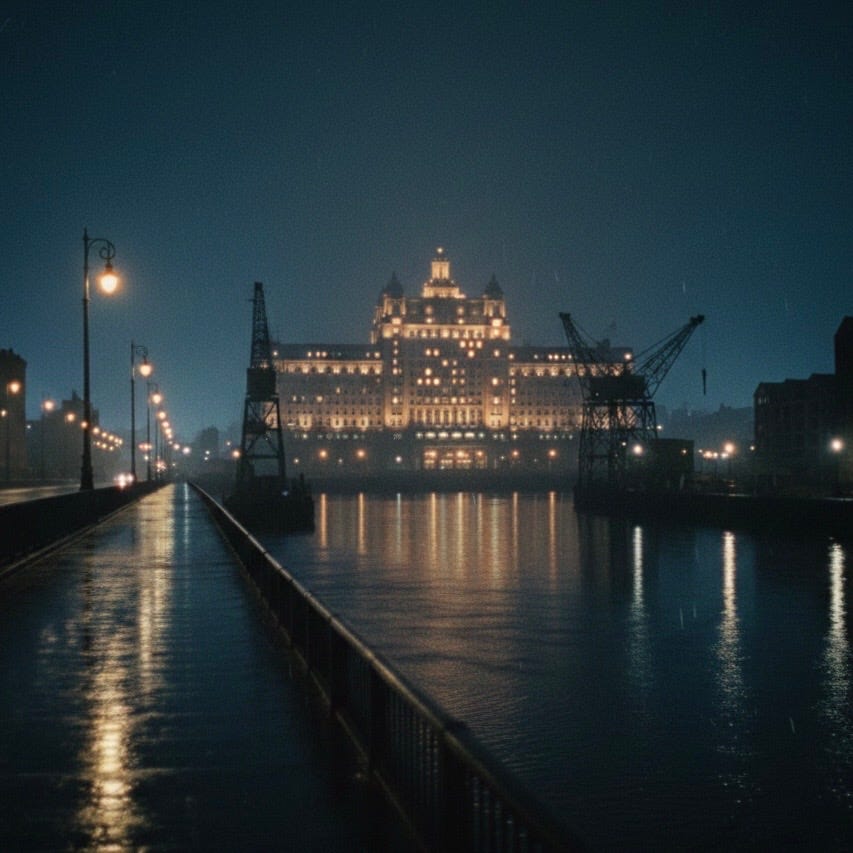
Arty Zee stood on the pavement outside the St Enoch Hotel and watched his own breath cloud in the cold air. Ten minutes early. Not because he was keen. Because men who arrived late to see Jimmy McBride didn’t usually get the chance to arrive again.
Inside, everything smelled faintly of polish and old money. Deep carpets. Brass fittings. Men in suits pretending not to notice other men in suits pretending not to notice them. The kind of place where nothing illegal ever happened except constantly.
Roth was already waiting.
“You look like you’re going to a funeral,” Arty said.
Roth didn’t smile.
“In a way, you are.”
The lift hummed as it climbed.
No music.
No small talk.
Just machinery carrying two men toward something neither of them could stop.
Jimmy McBride’s suite overlooked the River Clyde, grey, thick, slow, carrying the weight of a century’s worth of deals nobody ever wrote down.
Jimmy sat at a small table, pouring tea.
No rings.
No flash.
Just neat hair, clean cuffs, and eyes that didn’t blink.
“Arty Zee,” he said. “Sit down, son.”
Arty did.
Jimmy poured the tea. Milk first. Like a man who still believed rules mattered as long as he wrote them.
“I knew your father,” Jimmy said. “Careful man. Didn’t dream too much. That’s how he lasted.”
“And still owed you five million,” Arty replied.
Jimmy smiled.
“Yes.”
Silence settled into the room.
“You don’t have the money,” Jimmy said. “Nobody ever does. That’s not the point.”
“What is?”
“I don’t want your factory,” Jimmy said. “Too visible. Too many workers. Too many stories. I want what you’re becoming.”
Arty frowned.
“Football is changing,” Jimmy continued. “Television. Colour broadcasts. Advertising. European tours. It’s no longer just clubs. It’s images. Identities. Brands worn in front of millions.”
“I make soles.”
“You make belief,” Jimmy corrected.
Roth shifted slightly.
“I’ll clear your father’s debt,” Jimmy said. “Not because I’m kind. Because you’re useful.”
“And in return?” Arty asked.
“A silent percentage of whatever you become.”
Arty stared at the tea. The surface barely moved.
“And if I say no?”
Jimmy shrugged.
“Then banks will find concerns. Insurers will discover clauses. Suppliers will experience delays. And sometimes buildings catch fire.”
No threats.
No raised voices.
Just logistics.
“You’re not a criminal,” Jimmy said softly. “That’s why this hurts you. Criminals expect this. You still think there’s a clean way through.”
Arty felt something snap, not fear, but clarity.
“This isn’t partnership,” he said. “It’s ownership.”
Jimmy smiled.
“Everything is ownership, son. We just argue about who admits it.”
That night Arty stood on a bridge over the Clyde, watching the water slide past like money.
No loyalty.
No memory.
Just direction.
A newspaper blew against his shoe.
A headline about Leeds United’s European run.
Another about George Best drinking too much in Manchester.
Football everywhere.
Money everywhere.
Ownership moving quietly underneath both.
Back in Leeds, the attention arrived.
Fire inspectors.
Noise complaints.
Health and safety visits.
A factory ignored for thirty years suddenly became fascinating.
“This is harassment,” Ben said.
“No,” Arty replied. “This is leverage.”
Orders kept rising.
So did the interference.
A rubber supplier in Hamburg vanished.
A Rotterdam distributor pulled out.
A broadcaster’s assistant asked who really owned Arty’s new sole design.
Roth rang again.
“European firms are asking about you.”
“Which ones?”
“The kind that don’t introduce themselves.”
Then Ginger Thompson rang from somewhere in Leeds.
“I hear you’ve been making friends,” he laughed.
“What do you want?”
“Just reminding you where you still live.”
The line went dead.
Arty stood at the office window, watching men clock in for the night shift.
Everyone thought they owned him.
Glasgow.
Leeds.
Banks.
Corporations.
And somewhere else, quietly, someone was deciding whether he was worth keeping.
For the first time since his father died, Arty didn’t feel trapped.
He felt priced.
The Call
The phone rang at 02:14.
Not Jimmy.
Too clean.
“Mr Zee,” a woman said. “Northern Industrial Insurance.”
“We’re reviewing your policy. Your premises has been reclassified as a brand asset.”
“And?” Arty said.
“Brand assets don’t qualify for standard fire insurance.”
“So my cover is void.”
“It has been reinterpreted.”
“By who?”
“I don’t have that information.”
A pause.
“If the claim is denied, your lenders will be informed.”
“How long do I have?”
“Until the paperwork finishes moving.”
“When will that be?”
“When it reaches the people who already know the outcome.”
The line went dead.
No threats.
No shouting.
No violence.
Just a quiet administrative way of saying:
You don’t own this story anymore.
Downstairs, a night shift worker dropped a tool and swore.
Arty almost laughed.
Because that man still thought mistakes were loud.