

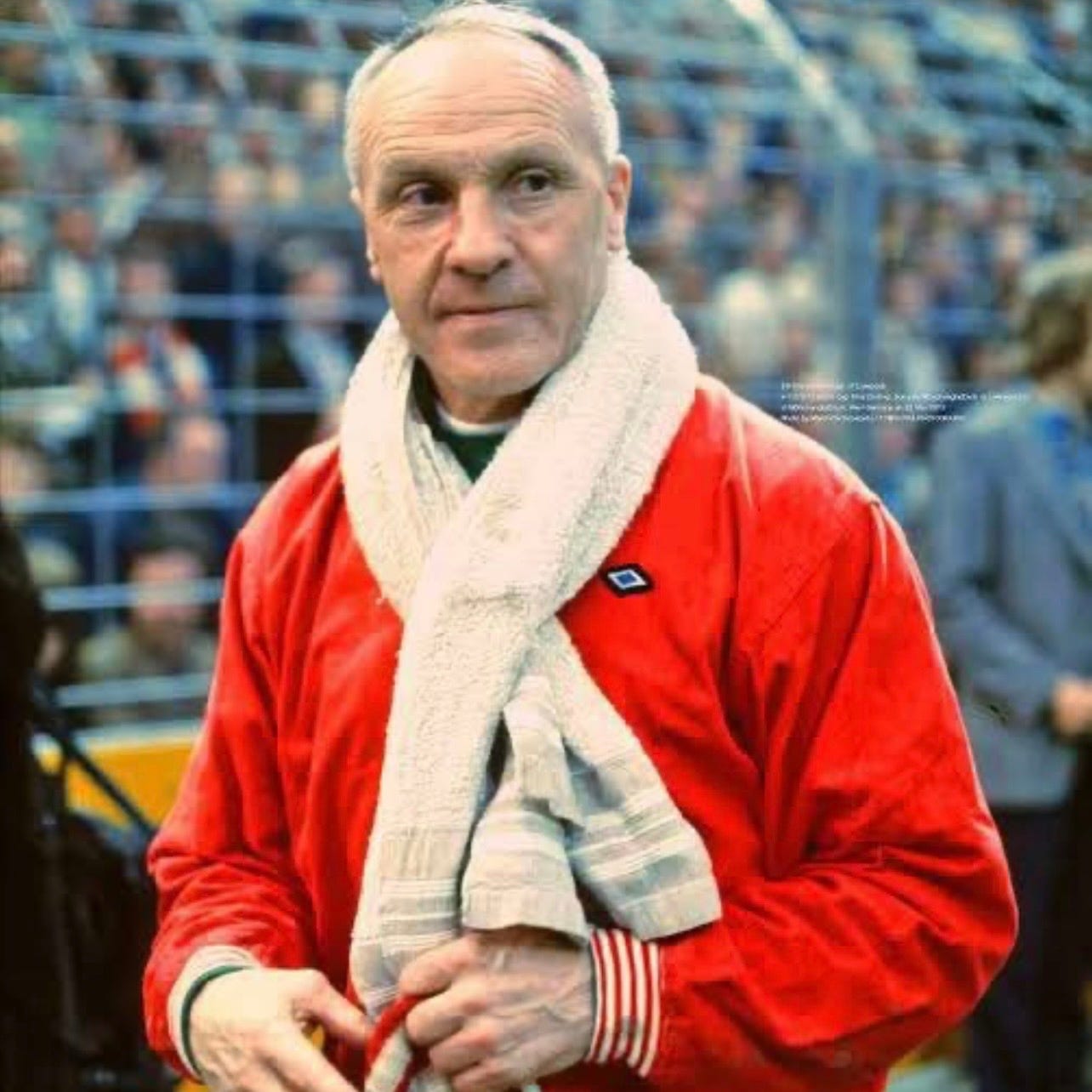
When Bill Shankly took over Liverpool F.C. in 1959, the club was in the Second Division.
He didn’t complain.
He rebuilt it.
He ripped out complacency.
He raised fitness standards.
He modernised preparation.
He turned Anfield into a fortress.
But the real revolution wasn’t tactical.
It was structural.
At the back of the old Main Stand sat the Boot Room. Small. Steamy. Unremarkable. Inside that room, ideas were debated. Standards were protected. Knowledge was shared. Succession was planned.
Shankly wasn’t building a team.
He was building a system that could win without him.
That’s the part people don’t understand.
Most leaders want credit.
Shankly wanted continuity.
He grew up in Glenbuck, a mining village where ego could get you killed. Underground, if one man cut corners, everyone paid. Shared effort wasn’t ideology.
It was survival.
So when he said he believed in everybody working for each other and sharing the rewards, he wasn’t performing politics.
He was describing alignment.
Now look at the modern game.
Supporters create atmosphere.
Communities create identity.
Players generate spectacle.
Grassroots produce talent.
But ownership concentrates value.
Private equity extracts margins.
Clubs are leveraged.
Ticket prices rise beyond local wages.
Supporters become “engagement.”
The effort is collective.
The reward is private.
That is structural hypocrisy.
And it slowly corrodes belief.
You can market loyalty.
You cannot extract it forever.
Shankly understood something executives forget:
Clubs are civic institutions with floodlights.
They are not tradeable assets with scarves attached.
He would walk Anfield when it was empty and understand that the power didn’t sit in the directors’ box.
It sat in the Kop.
Modern football inverted that equation.
And here’s where I’m clear.
I don’t want to be Shankly.
I want to apply his principle at scale.
I’m not trying to recreate a Boot Room in one club.
I’m trying to build a football industry where shared effort connects to shared reward.
Where governance reflects the people who create the culture.
Where supporters are structurally included, not emotionally manipulated.
Where long-term stewardship beats short-term extraction.
Where alignment replaces exploitation.
Fan ownership is not rebellion.
It’s structural coherence.
If supporters generate the energy, fund the ecosystem, and transmit identity across generations, excluding them from participation isn’t efficiency.
It’s imbalance.
Shankly fused morality with competitiveness.
He proved that belief is performance enhancing.
Modern football pretends you must choose between cultural integrity and commercial scale.
That’s lazy thinking.
Alignment is scale.
Trust compounds.
Extraction erodes.
And here is the founder truth most people avoid:
If your movement collapses without you, you didn’t build a system.
You built dependency.
Shankly built succession.
Paisley didn’t inherit chaos.
He inherited structure.
That is what durability looks like.
If football continues to socialise effort while privatising reward, it won’t collapse overnight.
It will just slowly lose its soul.
The chants will get louder.
The sponsorship boards will get brighter.
The balance sheets will grow.
And something essential will quietly thin out.
Shankly would see that immediately.
And he wouldn’t romanticise it.
He would rebuild it.
Shared effort.
Shared reward.
Shared power.
Anything less is just extraction dressed as tradition.