

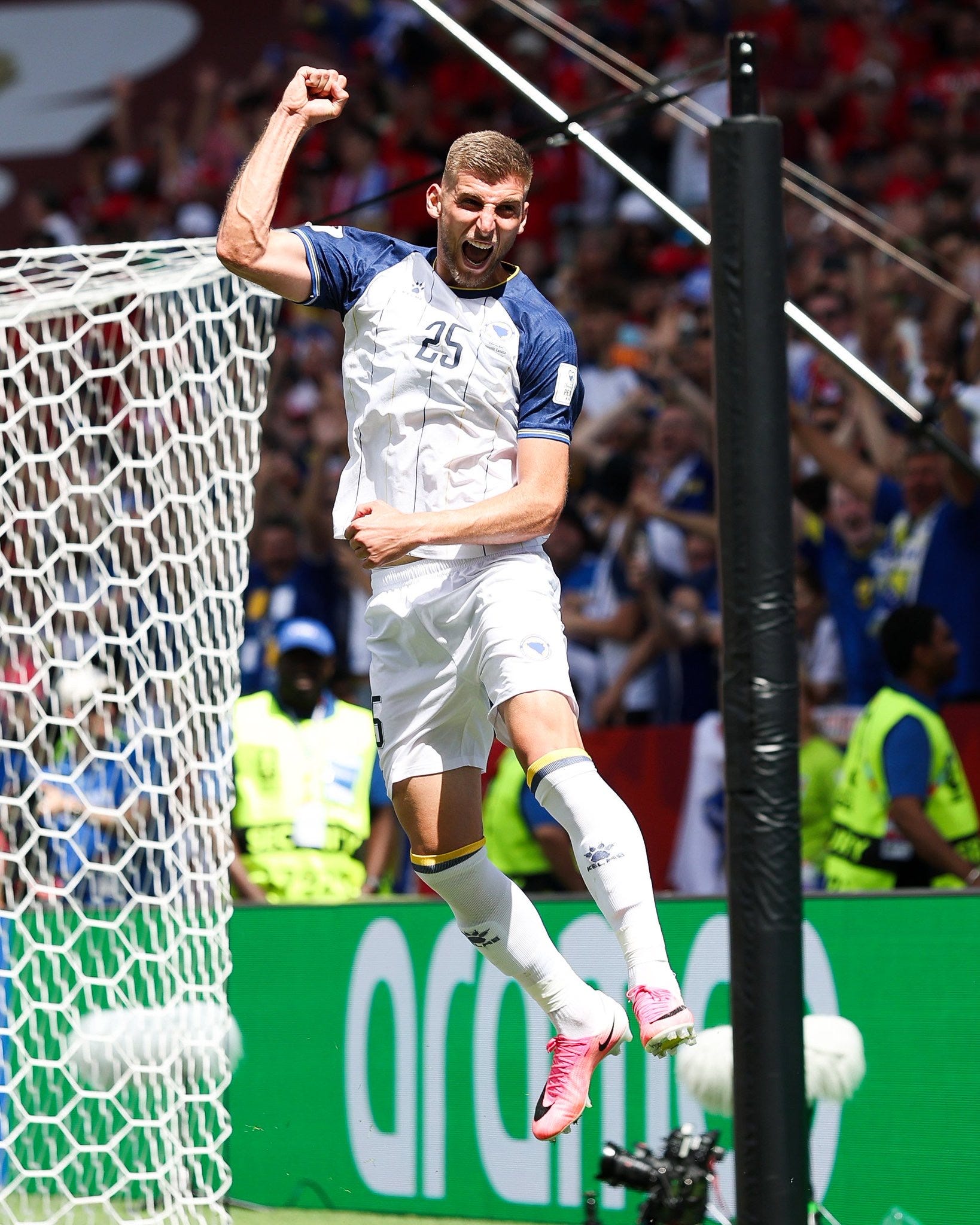
Last night Bosnia drew 1-1 with Canada in their World Cup opener.
Jovo Lukić scored a brilliant header.
Cyle Larin dragged Canada back into the game.
Most people watching saw a football match.
I saw something else.
I cheered when Bosnia scored.
Not because I’m Bosnian.
Not because I support Bosnia.
Not because I had money on the game.
I cheered because I remembered some lads.
Years ago, I became friends with a group of Bosnian refugees.
Young men.
Good men.
Working-class men.
When I first met them, their English was rough.
Their manners weren’t.
They were funny.
Generous.
Hard-working.
The sort of lads every community needs.
The sort of men football clubs, pubs, factories and towns are built around.
But when Bosnia came up, something changed.
The smiles faded.
The room seemed to shift.
Their voices became quieter.
Their eyes seemed to look somewhere far beyond the walls around them.
Back home.
Back to memories they never asked to carry.
They told me about leaving.
About fear.
About uncertainty.
About families scattered across countries.
About arriving in Britain unable to speak the language and having no idea what the future looked like.
They told me about ethnic cleansing.
The phrase sounds clinical.
Almost bureaucratic.
As though it belongs in a government report.
It doesn’t.
It belongs in the darkest parts of human history.
Because ethnic cleansing is not a policy.
It is people.
People losing homes.
People losing families.
People losing neighbours.
People losing entire worlds.
That stayed with me.
Maybe because their story touched something already inside my own family.
My grandfather came to Britain from Poland after the Second World War.
Different country.
Different conflict.
Same wound.
He arrived looking for a future.
So did they.
That is what survivors do.
They take broken pieces and somehow build lives from them.
A job.
A family.
A home.
A future.
A reason to keep going.
That is why I struggle with how casually war is discussed.
The language is always so tidy.
Strategic interests.
Military capability.
Defence spending.
National security.
Geopolitical objectives.
Important words, apparently.
Yet underneath every one of them is the same reality.
A family leaving home.
A frightened child.
A grieving parent.
A refugee carrying their life in a bag.
The people who suffer most are rarely the people making the decisions.
The men giving speeches are rarely the men crossing borders.
The people drawing lines on maps are rarely the people forced to live with the consequences.
That doesn’t mean every conflict is identical.
It doesn’t mean every government is equally responsible.
History is more complicated than that.
But the suffering is not.
The suffering is always real.
And it is almost always carried by ordinary people.
That is why I worry when war becomes normalised.
When military spending is discussed like a football transfer budget.
When escalation is treated as strength.
When entire industries become dependent on preparing for the next conflict.
When children grow up hearing more about weapons systems than peace.
I am not interested in left versus right.
I am not interested in party politics.
I am interested in people.
The people who survive.
The people who rebuild.
The people who somehow find the courage to begin again.
Those Bosnian lads loved Britain.
Not because Britain was perfect.
Because Britain gave them a chance.
They worked.
Integrated.
Built lives.
Raised families.
Contributed.
Just as generations of Poles, Irish, Italians, Jews, Asians, Africans and countless others have done before them.
That is what I thought about when Bosnia scored.
Not governments.
Not politicians.
Not borders.
People.
The older I get, the more I believe most human beings want exactly the same things.
A safe home.
Food on the table.
People they love.
A decent job.
A chance to watch football on a Saturday afternoon.
That’s it.
The vast majority of humanity is not looking for conflict.
It is looking for peace.
That is why a phrase kept coming back into my head after the final whistle.
Send the guns to space.
Not as a slogan.
As a refusal.
A refusal to accept that this is the best humanity can do.
A refusal to accept that children must keep inheriting the consequences of powerful men’s vanity.
A refusal to accept that we can build rockets, split atoms, map the human genome, create artificial intelligence and still treat war as inevitable.
Send the guns to space.
Send the missiles.
Send the tanks.
Send the clever speeches.
Send the contracts.
Send the defence brochures.
Send the lobbyists.
Send the whole bloody industry.
Launch it into the dark and let humanity breathe for once.
Last night Bosnia scored a goal.
The goal lasted a few seconds.
The memories lasted much longer.
I thought of those lads.
I thought of my grandfather.
I thought of every person who has ever had to leave home because powerful men made peace impossible.
And I thought this:
War destroys.
Ordinary people rebuild.
History remembers the generals.
Civilisation is carried by the survivors.