

There are footballers who become brands.
And then there are footballers who become legends.
Robin Friday was the second kind.
He didn’t just play football.
He disturbed it.
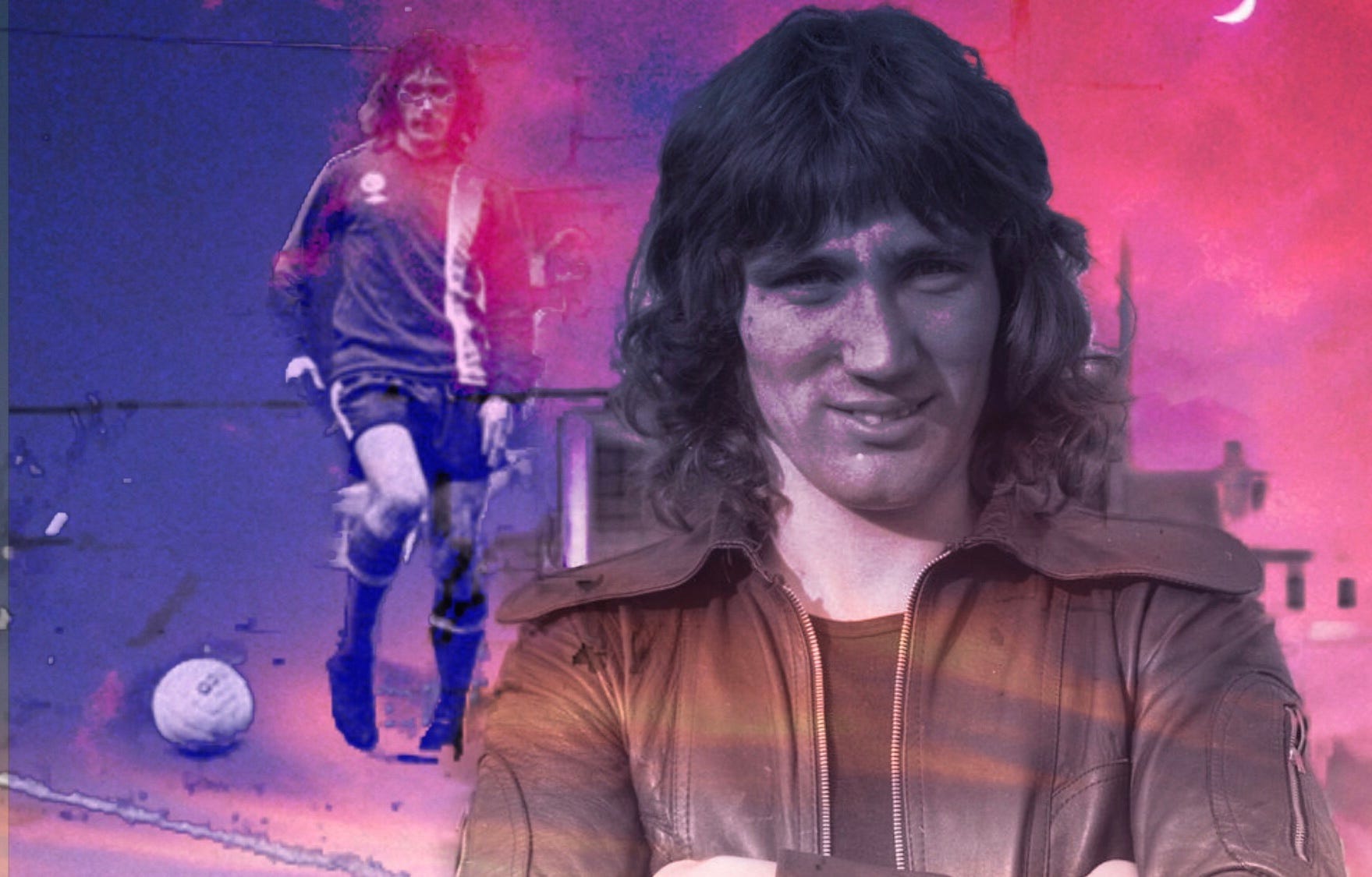
Long hair. Socks down. Shirt untucked.
A pub fighter in a pro game that was trying to become polite.
In an era when footballers were being groomed into corporate assets, Friday refused to behave like one. He drank too much. Fought too often. Missed training. Turned up late. Scored outrageous goals. Humiliated defenders. Disappeared for days. Reappeared like nothing had happened.
And every time he walked onto a pitch, you felt it.
This wasn’t a professional.
This was a problem.
The man who embarrassed the establishment
Ask any defender who faced him and you’ll hear the same thing:
Robin Friday didn’t just beat you.
He made you look stupid.
Nutmegs. Dummies. Cruel flicks.
Not for show — for domination.
There’s a famous photo of him leaping past a sliding tackle, hair flying, boots flashing, crowd roaring. That image isn’t about a goal. It’s about defiance.
That’s what Friday represented.
A reminder that football belonged to the terraces, not the boardrooms.
Sex, drink, drugs — and genius
He lived exactly how he played.
He drank.
He fought.
He loved.
He burned bright and fast.
Stories follow him like smoke:
• Turning up hungover and destroying a defence
• Sleeping rough, then scoring wonder-goals
• Fighting teammates
• Walking out on contracts
• Refusing to behave like an asset
He was the opposite of a franchise player.
He was uncontrollable.
And that’s why people still talk about him decades later while a thousand “professionals” have been forgotten.
Why he mattered
Robin Friday exposed a truth that still haunts football:
The game is at its best when it’s dangerous.
Before PR teams.
Before image management.
Before performance metrics.
Back when a player could be a genius and a liability.
Back when boots weren’t fashion — they were weapons.
The boots that carried the chaos
Robin Friday wore Stylo Matchmakers.
Not because they were trendy.
Because they were built for players who didn’t play safe.
Proper leather.
No nonsense.
Built for mud, violence, rain, and tackles.
Boots for men who didn’t expect protection from the system.
They weren’t pretty.
They were honest.
Just like him.
Why his story won’t die
Friday didn’t have a long career.
He didn’t win silverware.
He didn’t play the game the way the system wanted.
And that’s exactly why he still matters.
Because football didn’t make him famous.
He made football feel alive.
In today’s world of media training and brand partnerships, Robin Friday feels like a ghost from a time when players were allowed to be human — reckless, brilliant, self-destructive, and unforgettable.
A tribute that feels inevitable
Some stories don’t want to be archived.
They want to be worn.
Robin Friday’s life — his chaos, his courage, his refusal to behave — belongs to a kind of football that still exists in pubs, terraces, Sunday leagues, and memories.
A limited tribute range built around that spirit isn’t commerce.
It’s cultural preservation.
A way of saying:
Football wasn’t always clean. And that’s why it was beautiful.
Final truth
Robin Friday didn’t lose his way.
Football did.
And every time someone sees his name on a wall, a shirt, or a story and says
“bloody hell, what a player”…
…that’s the game remembering what it used to be.