

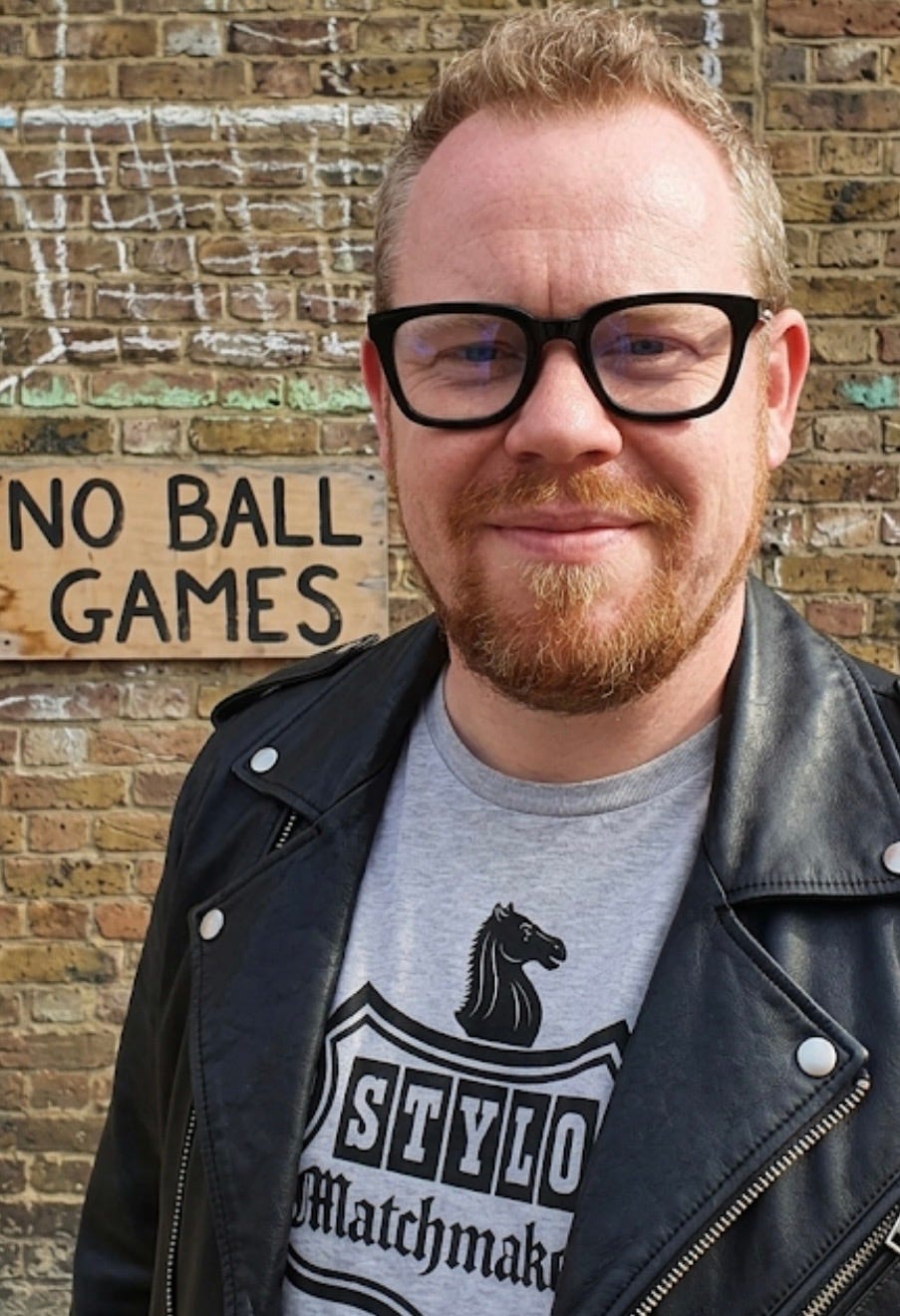
I’m not raising £2.5M.
I’m appointing the one who leads Football Is For The Fans.
Let’s be clear from the start.
This is not a pitch.
I’m not sending decks around hoping someone “likes the idea”.
I’m building something that is already forming.
And I’m selecting one person to step in early enough to matter.
Football isn’t broken.
It’s controlled.
Controlled by a system that extracts value instead of sharing it.
Fans fund everything:
tickets
media
merchandise
And receive nothing in return.
No ownership.
No participation.
No upside.
That is not a demand problem.
It is a structural failure.
Other sports solved this years ago.
Ultimate Fighting Championship transformed competition into global events.
WWE built a publicly traded business on narrative, characters, and audience capture.
Promoters like Eddie Hearn understand a simple truth football still ignores:
attention is the primary asset.
Fan ownership is not theoretical.
The Green Bay Packers have over 500,000 shareholders and have raised tens of millions directly from fans.
Clubs such as AFC Wimbledon and Portsmouth FC have demonstrated that supporter-backed structures can sustain and grow real clubs.
At the top end, Major League Soccer expansion fees now sit in the $500M–$600M range.
Even at the next level, United Soccer League franchises require ~$20M–$30M for second division entry.
Access exists.
Alignment does not.
Franchise systems are often presented as stability.
In reality, they concentrate control and limit flexibility.
I’ve seen operators across multiple industries commit serious capital into franchise structures, only to have terms shift, territories restricted, or economics altered after entry.
Millions can be deployed into systems where the upside is capped and the rules can change.
Football has adopted a version of this model.
High entry costs.
Centralised control.
Limited participation in long-term value creation.
It works for the system.
Not for the operator.
What’s surprising is not that it exists.
It’s that it’s accepted as the only way in.
So I am building something outside the system.
Not a league.
A platform.
A touring football model built on:
live events
narrative
ownership
controlled distribution
Where:
fans participate economically
clubs operate as structured assets
content drives attention
attention converts into ownership
This is not conceptual.
We control historic football IP including:
Los Angeles Aztecs
Chicago Sting
Washington Diplomats
National Soccer League branding
Structured for commercial use across events, media, and merchandise.
We have:
20M+ organic reach
2,500+ high-intent subscribers
70+ aligned participants
Active venue discussions across the United States and United Kingdom with operators open to hosting early events under commercial agreements.
This is forming before capital, not after it.
This is not just merchandising.
This is controlled narrative.
Every event is designed as both a live experience and a media asset.
Audience is captured.
Data is owned.
Content is distributed.
This is building football media around clubs from day one.
This operates outside traditional league structures.
Short-format events.
Non-conflicting schedules.
Independently contracted talent.
No reliance on existing systems.
Execution is where most football ideas fail.
Not because the vision is wrong.
Because the mechanics are underestimated.
Talent access.
Match quality.
Scheduling.
Venue economics.
Conversion from attention to attendance.
These are real constraints.
This model is built with that in mind.
Short-format events.
Condensed schedules.
Independently contracted talent aligned through revenue and exposure rather than long-term wage commitments.
Commercial venue partnerships, not reliance on league infrastructure.
Events designed as both revenue units and content assets, not one-off fixtures.
This is not attempting to replace the existing system.
It is designed to operate alongside it.
Lean.
Repeatable.
Commercially driven.
Early traction reflects formation, not scale.
Audience, IP, network, and distribution are in place.
The event engine is the next phase.
That is exactly what this round funds.
My role is clear.
Build something people care about.
Fill seats.
Create moments that convert into attention, revenue, and ownership.
That is what I have done before.
That is what I am doing again.
This is not a capital-first build.
It is a demand-first system.
Because if you cannot put people in seats, nothing else matters.
The role of the lead is not to create demand.
It is to scale what already works.
I build the energy.
The right partner structures and accelerates the capital behind it.
Now we get to the only part that matters.
I am locking the first £500K–£1M of a £2.5M build.
And I am appointing one person to lead it.
Not a committee.
Not a process.
One operator.
Someone who has built, exited, and still moves with conviction.
Here is the position.
You do not simply invest.
You lead.
You take priority allocation in the round.
You shape the first layer of capital behind you.
And you participate in the upside of the capital you introduce.
If you bring £1M into this, you do not sit passively inside it.
You earn across it.
Because this is not a single asset.
It is a system.
Events generate revenue.
Content captures attention.
Audience becomes owned data.
Data drives sponsorship and repeat monetisation.
Clubs become structured assets.
Ownership compounds.
Then it repeats.
And it scales.
This is being built ahead of 2026.
That matters.
When the World Cup lands in the United States, global attention concentrates.
After that:
entry becomes more expensive
attention fragments
and positioning becomes harder
This is the window.
There is already capital circling.
There are already conversations underway.
This is not about whether it starts.
It has already started.
This is about who leads.
Most people will read this and do nothing.
That is how it always works.
This is for the person who has already built once.
Who understands timing.
Who recognises when something is early but inevitable.
The kind of person who does not wait to be told.
Because the reality is simple.
The biggest opportunities never look comfortable at the point of entry.
They look early.
They look unfinished.
They look like this.
The difference is who steps in anyway.
The lead position will be closed within the next few weeks.
After that, allocation tightens and access narrows.
This will get built.
With or without outside capital.
That is not confidence.
That is direction.
The only question is not whether this gets built.
It is who is known for leading it when it does.
If you understand what this is, you will not need convincing.
scott@footballisforthefans.com
Let’s move.