

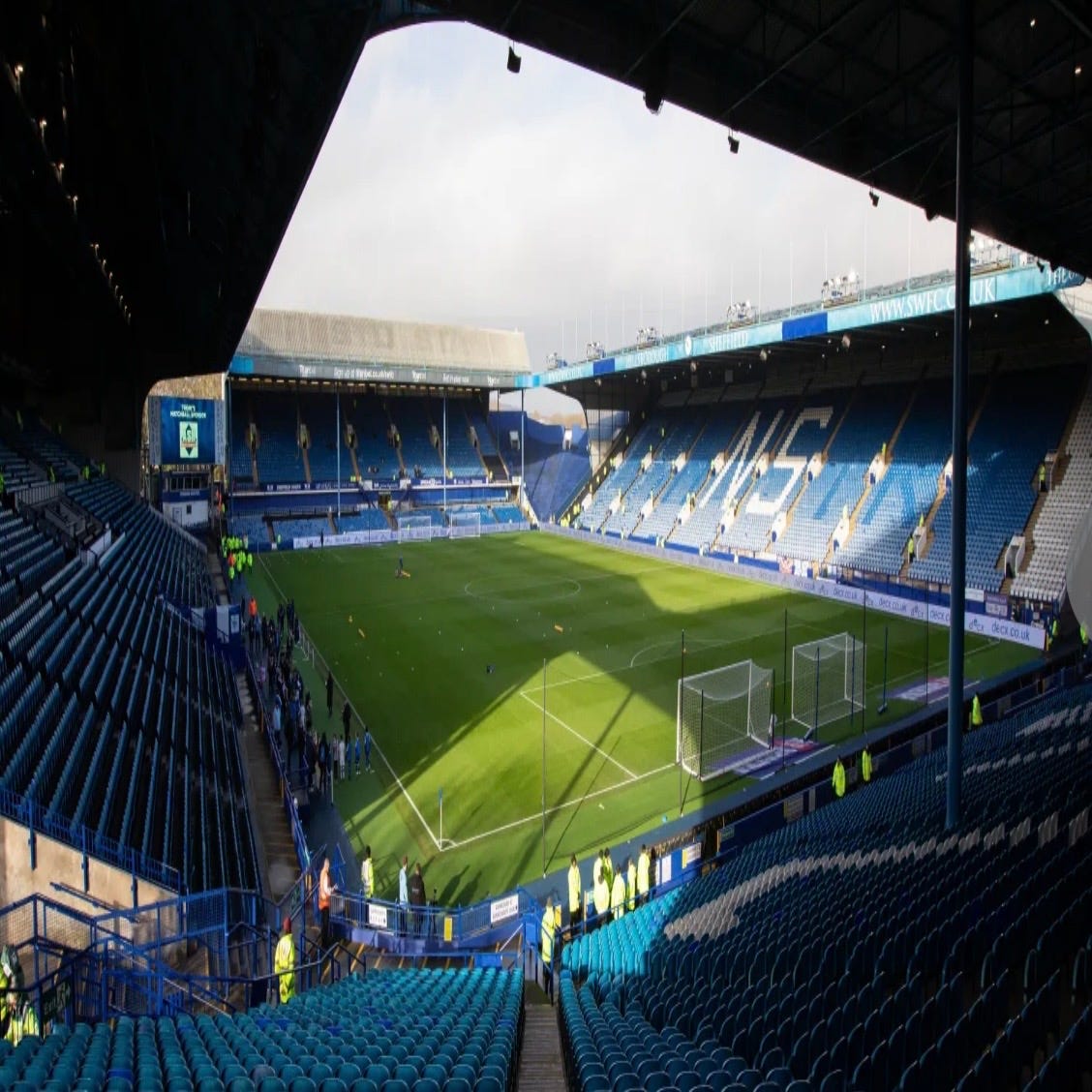
There’s a number being repeated about Sheffield Wednesday.
£48 million.
It sounds reassuring. It sounds powerful. It sounds like a club of this size “should” command that figure.
But administration doesn’t sell pride.
It sells arithmetic.
When a football club enters administration, you are not buying history.
You are not buying emotion.
You are not buying potential.
You are buying:
• A creditor hierarchy
• A distressed entity
• A points deduction
• Revenue compression
• Legal complexity
That is not a £48m equity transaction.
That is a rescue operation.
We have seen this before.
Wigan Athletic — FA Cup winners and former Premier League club — went into administration and was sold for around £2.4 million.
Not because it lacked heritage.
But because insolvency compresses value without mercy.
Equity gets wiped.
Risk gets priced.
Cash flow becomes king.
That is the system.
So when £48m is attached to Sheffield Wednesday, I don’t see a completed deal.
I see a headline that didn’t survive due diligence.
Because once serious buyers open the books and examine:
• The full creditor list
• HMRC exposure
• Stadium ownership structure
• Owner-linked claims
• Wage commitments
• Relegation risk
The deal stops being romantic.
It becomes mathematics.
And the mathematics is simple.
In administration — particularly with a 12–15 point deduction and relegation risk — the realistic acquisition range is far more likely to sit around:
£12m–£15m.
That clears creditors.
That satisfies administrators.
That secures control.
But here is the part most people refuse to confront.
The purchase price is the easy bit.
Funding the future is the hard bit.
A club of Wednesday’s size in League One could burn £5m–£7m per year during stabilisation.
If you want three years of runway, you are looking at £30m+ in committed working capital.
So a serious structure looks like this:
£12m–£15m acquisition
£30m–£35m operational runway
Total backing in the region of £45m–£50m.
Not as a vanity number.
As survival discipline.
Because administration is not a reset powered by hope.
It is a reset powered by capital, governance and restraint.
The real question is not who clears yesterday’s debt.
It is who funds tomorrow’s stability.
Fans should not be organising themselves to bail out historic liabilities.
They should be organising around governance, transparency and long-term structure.
One plugs holes.
The other builds foundations.
Sheffield Wednesday is a great club. A huge club. A sleeping giant — but only if run properly.
Any credible consortium must be built around experienced football operators, disciplined financial governance and long-term capital partners. This is not a one-man play. It is a structured leadership project.
If the right aligned partners and capital framework existed, I would be prepared to lead that structure.
Not to gamble.
Not to posture.
But to fund it correctly for three seasons without blinking.
Because clubs do not collapse because they lack history.
They collapse because they lack liquidity.
And liquidity is not emotional.
It is disciplined.
Arithmetic decides survival.
And arithmetic does not lie.