

I walked away from Blackburn Rovers last year after nearly forty years of loyalty and hundreds of games. That wasn’t disillusionment. It was recognition. The club I had followed my entire life no longer existed in any meaningful sense.
So when Blackburn were recently sued by their own kit supplier, Macron, it didn’t feel shocking. It felt like confirmation.
Because clubs that are healthy don’t end up in court with their commercial partners.
Clubs that are being quietly hollowed out do.
This is not a story about shirts.
It is a story about what happens when football stops being run for football.
The Day the Clock Stopped
In 2010, Blackburn Rovers were a stable Premier League club. They had Sam Allardyce, a manager hired for one simple reason: keep Blackburn competitive in the top flight.
Then Venky’s arrived.
Allardyce was sacked. Steve Kean was installed. Public promises were made about ambition and global stars. Ronaldinho was even spoken about.
What followed was not transformation. It was erasure.
Within two seasons, Blackburn were relegated.
Not long after, they were in League One.
Supporters protested. Chickens were thrown onto the pitch to symbolise what fans felt the club had become. It looked absurd. But it was also prophetic.
A football club was being turned into a remote-controlled asset.
When Cost Control Replaced Football
Years later, under Tony Mowbray, Blackburn briefly felt alive again. Promotion was in sight. Momentum returned.
Then came a decision that revealed everything.
Blackburn had two away games in one week on the south coast. Southampton, Bournemouth, Brighton — clubs all within easy reach of one another. Any modern football operation would have kept the squad down there to recover, train, and prepare properly.
Instead, the players were sent all the way back to Lancashire between games.
Why?
“No budget.”
A promotion-chasing club owned by billionaires chose hotel savings over sporting performance. That was not a mistake. It was policy.
From that moment on, Blackburn were no longer being run to win.
They were being run to control cost.
The Dismantling of a Team
The proof sits in the transfer record.
Blackburn sold:
-
Joe Rankin-Costello
-
Callum Brittain
-
John Buckley
-
Lewis Travis
-
Harry Leonard
-
Dominic Hyam
This was not deadwood.
This was a Championship-level spine — full-backs, midfield engines, a centre-half, a striker.
Every one of them would walk straight back into the team today.
They weren’t sold because they weren’t good enough.
They were sold because they were valuable.
What replaced them were loans, low-cost overseas punts, and short-term projects.
That is not squad building.
That is asset rotation.
A Club Without a Centre
Blackburn no longer even has a publicly named Chief Executive. The CEO left. No replacement was appointed. The club is now run by a COO and a CFO reporting directly to ownership.
That is not a football governance structure.
That is a corporate one.
When football people disappear from the top, football logic disappears with them. What remains is cost control, contract management, and risk avoidance.
That is how you end up with fans disengaging, coaches walking, and commercial partners taking you to court.
Which brings us back to Macron.
Why Macron Matters
When a kit supplier sues a football club, it is not about fabric. It is about trust, contracts, and financial stability.
It means a relationship has broken badly enough that lawyers have replaced conversation.
That does not happen at clubs that are coherent and well-run.
It happens when governance is weak and the balance sheet is being protected at all costs.
The Macron lawsuit is not the cause of Blackburn’s problems.
It is the first time those problems have become impossible to hide.
What Jack Walker Built
My grandad knew Jack Walker. Not as a billionaire. As a Blackburn man who believed a football club was a civic institution — something you built for a town and protected for the future.
Jack Walker put his own money into Blackburn because he loved it.
Venky’s bought it because it was an asset.
That single difference explains everything.
One builds a club.
The other manages a balance sheet.
Why Fans Are Walking Away
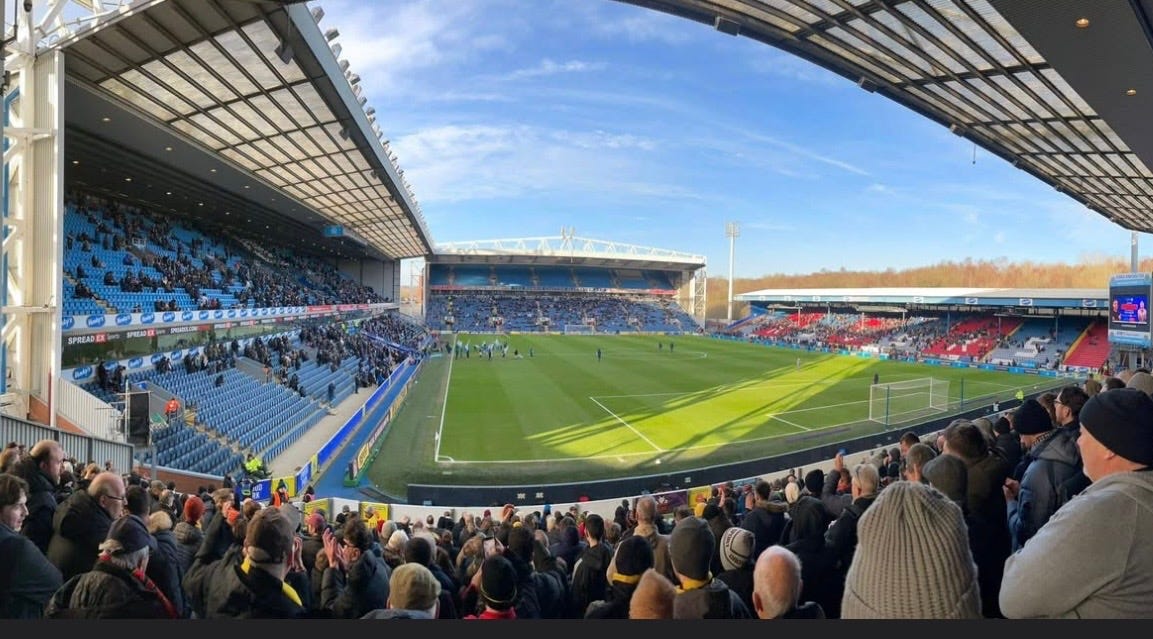
Look at Ewood Park now.
Boycotts. Protest banners. Silence. Empty seats.
Supporters do not abandon clubs because of results.
They abandon them when they feel erased.
I didn’t stop loving Blackburn.
Blackburn stopped loving what it was.
This Is Bigger Than Blackburn
What happened to Blackburn is not unique. It is simply early.
This is what happens when football clubs are treated as financial instruments, when ownership becomes remote, and when supporters become inconvenient.
The badge survives.
The history survives.
But the soul does not.
Blackburn Rovers were not beaten on the pitch.
They were quietly converted into something else — and unless football changes, dozens of clubs will follow.