

A graphic has been doing the rounds on social media.
It compares Britain in 1999 to Britain in 2026.
House prices up.
Pints up.
Energy bills up.
Chocolate bars up.
Wages up too, but nowhere near as fast.
The conclusion is simple.
“You aren’t crazy. The system is broken.”
The comments underneath are predictable.
Some say the figures are wrong.
Some say London distorts everything.
Some say young people have it easier.
Others say they have it harder.
Personally, I think everyone is arguing about the wrong thing.
The exact numbers don’t matter.
The feeling does.
Because I left school in 1999.
I wasn’t reading economic reports.
I wasn’t studying inflation charts.
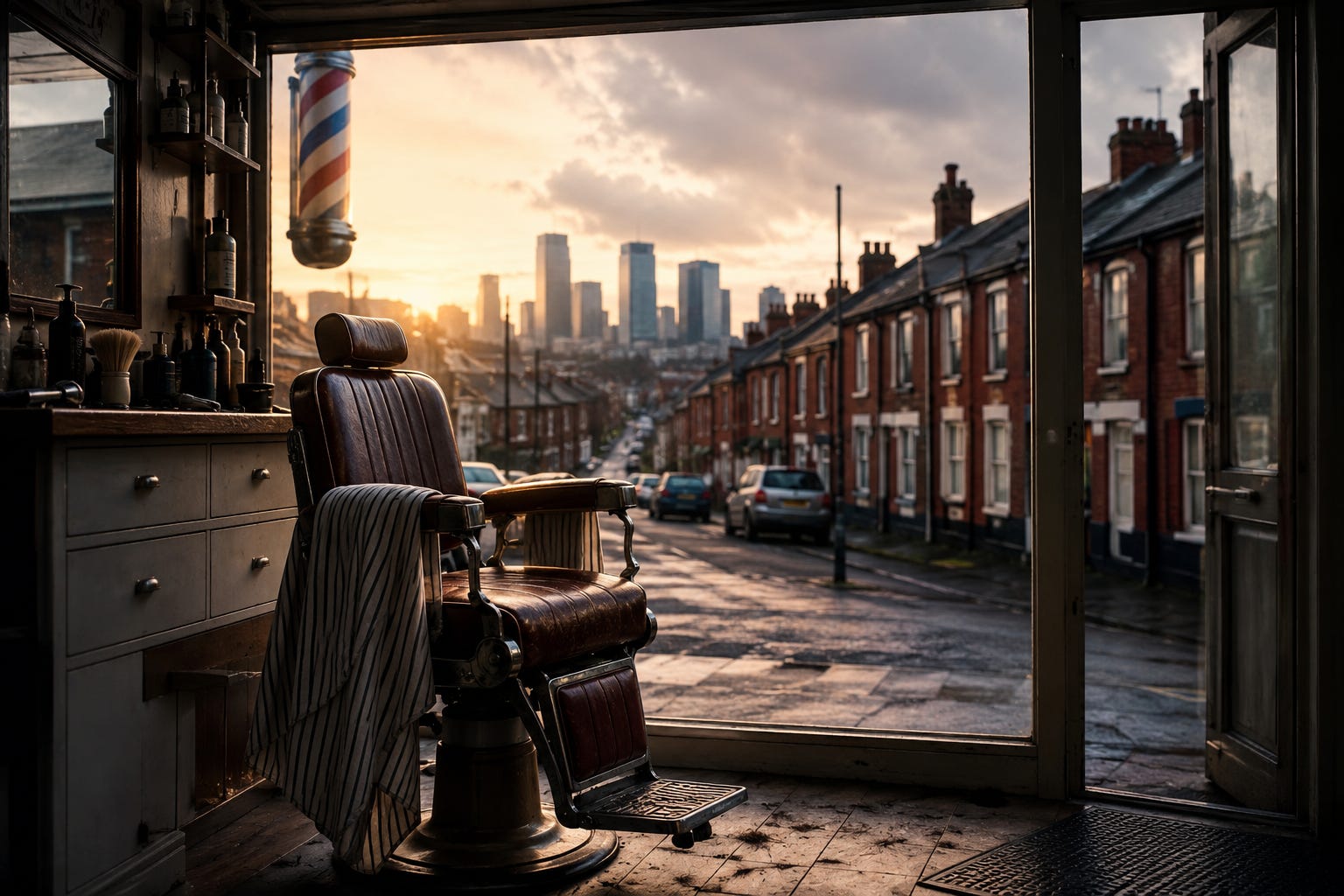
I was earning £50 a week sweeping floors in a hair salon.
My mum took £25 for board.
And somehow I still felt closer to the future than many people earning £40,000 a year today.
That’s the story the graph can’t tell.
When I left school, I was told I had three choices.
McDonald’s.
The army.
Or hairdressing.
That was the menu.
Not exactly a careers fair overflowing with opportunity.
I hated the idea of McDonald’s.
Not because of the people working there.
They were grafting like everyone else.
I just knew corporate life wasn’t for me.
The uniform.
The script.
The system.
The feeling that someone else owned your future.
That never appealed to me.
The army was out too.
I hated war.
Still do.
So that left hairdressing.
People laughed.
A lot of lads got stick for becoming hairdressers back then.
I got my fair share.
But while they were laughing, I was learning a trade.
And that trade changed my life.
People think hairdressers are thick.
They’re wrong.
Hairdressers are some of the most emotionally intelligent people in business.
Think about how many people sit in that chair.
Happy people.
Lonely people.
Nervous people.
Grieving people.
People going for job interviews.
People going on dates.
People trying to feel human again.
A good hairdresser doesn’t just cut hair.
They read people.
They listen.
They know when to talk.
They know when to shut up.
They make someone walk in feeling ordinary and walk out feeling ten feet tall.
That is not “thick.”
That is talent.
That is intelligence.
That is people skills at a level most corporate managers could only dream of.
Half of them couldn’t make someone feel good if HR gave them a laminated guide.
I started working in a salon for £50 a week.
Five days a week.
My mum took £25 for board.
That left me with £25.
Yet somehow I still had money.
I could buy clothes.
I could go out.
I could save.
I could live.
But the real money wasn’t coming from the salon.
It was coming from the reps.
After work, I would walk around my village cutting hair for £3.
House after house.
Customer after customer.
Month after month.
By the age of 17, I had built up around 50 customers a month.
That was another £150 a month in my pocket.
Back then, that was serious money for a teenager.
Enough for nights out.
Enough for clothes.
Enough to save.
Enough to travel.
By the age of 17, I had already been to Singapore.
I had already been to Florida.
A working-class lad who had left school at 15 was seeing parts of the world many people twice his age had never visited.
Not because I was rich.
Not because I was lucky.
Because effort still translated into progress.
The haircuts were never really about the money.
They were about the reps.
Every haircut taught me something.
How to talk to people.
How to build trust.
How to handle difficult customers.
How to sell.
How to listen.
How to solve problems.
How to turn strangers into regulars.
At the same time, I was learning how a salon operated.
Bookings.
Stock.
Customer service.
Cash flow.
Standards.
Pressure.
I was also studying for my NVQ at college.
Between the ages of 16 and 19, I did thousands of haircuts.
Thousands.
Think about that.
Today everyone talks about confidence.
But confidence isn’t something you buy.
It isn’t something you watch on YouTube.
It isn’t something you manifest.
Confidence comes from competence.
And competence comes from reps.
Thousands of them.
By the age of 19, I wasn’t guessing.
I wasn’t pretending.
I wasn’t playing entrepreneur on social media.
I had done the work.
Three years of graft.
Three years of customers.
Three years of mistakes.
Three years of learning.
Three years of saving.
That’s why I was able to open and run my own salon at 19.
Not because I had a business degree.
Not because someone invested in me.
Not because I came from money.
Because I had earned my confidence the hard way.
One haircut at a time.
There is another part of this story people don’t talk about enough.
The minimum wage helped stop exploitation at the bottom.
But around the same time many of the pathways above the bottom started disappearing.
The old route used to be simple.
Start at the bottom.
Learn the job.
Become trusted.
Become supervisor.
Become assistant manager.
Become manager.
Maybe one day own the place.
That ladder mattered.
It turned workers into leaders.
It turned grafters into business owners.
Over time, businesses flattened themselves.
Layers disappeared.
Middle management shrank.
Decisions became centralised.
The bridge between the shop floor and the boardroom became harder to cross.
And when that bridge weakens, social mobility weakens with it.
Looking back, I think that’s what worries me most about Britain today.
Not that young people don’t work hard.
Many work incredibly hard.
It’s that we have removed so many of the ladders that people like me climbed.
The rewards are smaller.
The costs are higher.
The risks are greater.
House prices have exploded.
Rent has exploded.
Bills have exploded.
Yet young people are told they are entitled if they complain.
The truth is simpler than that.
My generation was one of the last to experience a world where effort still felt connected to opportunity.
The deal wasn’t perfect.
But it existed.
A kid could leave school.
Learn a trade.
Work hard.
Save money.
Travel.
Start a business.
Build a life.
Today that path feels further away for millions of people.
The older I get, the more I realise that talent and opportunity are not the same thing.
I left school at 15.
I don’t have an Oxford degree.
I don’t have a Cambridge degree.
I wasn’t born into wealth.
I didn’t grow up around venture capitalists, investment bankers or private equity partners.
When I want to raise capital, I don’t have a family friend to call.
I don’t have an old university network to tap into.
I don’t have a WhatsApp group full of investors.
What I have is experience.
I’ve built businesses.
I’ve employed people.
I’ve sold products.
I’ve taken risks.
I’ve spent my life dealing with customers and solving problems.
Yet society often mistakes credentials for capability.
The same bias exists in investing.
Spreadsheets matter.
Of course they do.
But spreadsheets only tell part of the story.
A spreadsheet can tell you last year’s revenue.
It can tell you margins.
It can tell you costs.
What it cannot tell you is whether a founder is willing to spend ten years dragging an idea through walls.
The best investors understand numbers.
The great investors understand people.
Because businesses are not built by spreadsheets.
They are built by obsession.
By resilience.
By stubbornness.
By the refusal to quit when everyone else thinks you’re mad.
People love to talk about Mark Zuckerberg.
But I often ask myself a different question.
Would Zuckerberg have become Zuckerberg if he had grown up in a council house in Chorley?
Would he have met the same people?
Had access to the same networks?
Been introduced to the same investors?
Received the same opportunities?
Maybe.
Maybe he was so exceptional that nothing could have stopped him.
But I suspect there are thousands of people with extraordinary talent who never get the chance to find out.
Not because they lack ability.
Because they lack access.
Talent is everywhere.
Opportunity isn’t.
I wasn’t smarter than today’s young people.
I wasn’t more talented.
I wasn’t tougher.
I just arrived before the drawbridge started going up.
But broken ladders do not mean people stop climbing.
They mean the climb is steeper, colder and far less forgiving.
That is why skills matter.
That is why reps matter.
That is why young people need real paths, not just motivational slogans dressed up as wisdom.
The funny thing is that people used to laugh when I said I was becoming a hairdresser.
By 19, they weren’t laughing anymore.
They were asking how I had my own business.
The answer wasn’t complicated.
I chose the one path nobody wanted.
I put my head down.
I did thousands of reps.
I learned a skill.
I saved my money.
And I kept going when other people were busy taking the piss.
Turns out respect is often just delayed recognition.
And sometimes the best thing that can happen to you is having no good options.
Because when there’s no easy path, you stop looking for shortcuts and start building something real.