

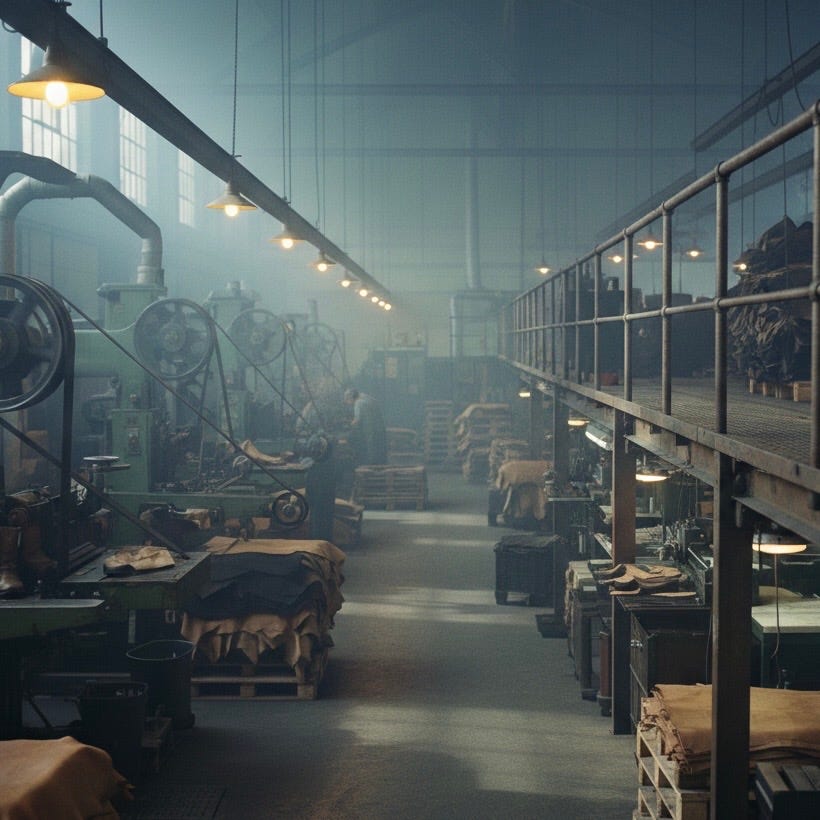
Previously, in Episode Three
Footshape Boot Works had stopped being just a factory.
Insurance terms changed without warning. Inspections arrived without accusation. Paperwork moved faster than people could react to it. The business had been quietly redefined as a brand asset — something more valuable on paper than in reality, and therefore more exposed.
Arty Zee began to understand the shift. Football was changing. Players were becoming symbols. Attention was becoming currency. Somewhere beyond Leeds, people had already begun building systems designed to capture it.
The call from America confirmed it.
Mark McCormack didn’t threaten. He didn’t negotiate.
He simply explained what was coming.
The player would become bigger than the club.
And the people closest to that change would either grow with it…
or be absorbed by it.
Episode Four — The Weight of Attention
The first thing Arty noticed was the noise.
Not inside the factory. That never changed. Machines still started before sunrise. Metal warmed slowly as heat moved through the presses. Knives struck leather in steady rhythm. Steam rose from moulds as rubber softened and shaped itself into something useful.
Work sounded the same as it always had.
Reliable. Predictable. Honest.
The noise came from outside.
Phones rang longer now. Not urgent, just persistent. Voices asking questions that sounded casual but weren’t. Distributors wanting meetings instead of deliveries. Journalists asking to “understand the story.”
Attention had arrived.
And attention didn’t behave like money.
Money moved quietly. Attention multiplied.
Ben dropped a stack of letters onto the desk.
“Half of these aren’t orders,” he said. “They want to know who represents us.”
Arty flipped through them slowly. Agencies. Retail groups. Foreign distributors offering introductions instead of contracts.
Middlemen.
People who appeared once something became visible.
“They’re not interested in boots,” Ben said.
“No,” Arty replied. “They’re interested in what happens after.”
Below them, a press slammed down hard enough to shake the office window. A worker swore. Someone laughed. The rhythm continued, unaware that the factory had already become something else.
The changes were small at first.
Individual requests instead of club orders. Players asking for adjustments. Different studs for different pitches. Softer leather. Less weight through the sole.
Names began appearing on order sheets.
Not teams.
People.
Arty noticed it in the returns. Boots sent back not because they failed, but because they felt wrong. Too stiff. Too heavy. Not quite right for the way someone moved.
Expectation had replaced acceptance.
“They used to wear what they were given,” Ben said one morning.
“They don’t have to anymore,” Arty replied.
Choice changed everything.
Choice created responsibility.
The first player arrived without warning.
Young. Nervous. Mud still on his trousers. Boots wrapped in newspaper.
“They said you fix things properly.”
Arty turned the boots in his hands. Cheap leather. Factory standard. Built to last, not to feel.
“What’s wrong with them?”
The player hesitated.
“They slow me down.”
Arty almost smiled.
“Boots don’t slow people down.”
The player shook his head.
“These do.”
It wasn’t arrogance.
It was belief.
And belief, Arty realised, mattered more than construction.
He adjusted the balance slightly. Shifted weight forward. Nothing dramatic.
When the player left, he looked relieved.
Not because the boots were better.
Because someone had listened.
It started as a joke.
Most things did.
A winger returned weeks later, grinning, saying he’d scored twice and hadn’t thought about his feet once.
One of the older machinists laughed across the floor.
“Zee’s not making boots,” he shouted. “He’s making matches.”
The name lingered longer than the joke.
Players repeated it without knowing where it came from.
“You’re the one who matches them, yeah?”
Matchmaker.
Arty ignored it. The factory didn’t need names. It needed orders filled and leather delivered on time.
But the word kept appearing.
Kit men asking if the matchmaker boots were ready. Trainers sending players north to see the lad in Leeds who could match a boot to the way you moved.
Not selling boots.
Matching players.
Ben noticed before Arty did.
“They’re not talking about the factory anymore,” he said quietly. “They’re talking about you.”
Arty didn’t like that.
Factories were safer than people.
Later, Roth saw the word scribbled beside an order.
“That’s how brands start,” he said.
“It’s just talk.”
Roth closed the ledger.
“No,” he said. “It’s identity.”
The second word arrived months later by accident.
A supplier invoice stamped with the Italian word Stilo — style, form, presentation.
Ben misread it aloud.
“Stylo,” he said, laughing. “Sounds better anyway.”
The two words sat together on the desk longer than either of them admitted noticing.
Stylo.
Matchmakers.
Not a company name.
Just something people said when they meant boots that felt right.
Arty left the paper where it was.
Some things didn’t need deciding.
They just needed time to become true.
The journalist appeared two days later.
Polite. Curious. Asking about innovation. About whether players should have identities separate from clubs.
Arty answered carefully.
Too carefully.
The article still ran with the headline:
THE BOOTMAKER BEHIND FOOTBALL’S NEW ERA
Ben pinned it to the wall like a warning.
“You didn’t say half of that.”
“I didn’t need to.”
Because once attention started, it filled in its own story.
The phone rang late that evening.
Glasgow.
Jimmy McBride sounded amused.
“You’re becoming visible, son.”
“That wasn’t the plan.”
Jimmy laughed softly. “Visibility’s always the plan. Just not yours.”
Silence followed.
“You know what happens now?”
“No.”
“You stop being judged on what you do,” Jimmy said. “You get judged on what people think you might become.”
The line went dead.
Elland Road felt smaller than Arty remembered.
Training finished. Floodlights humming above empty grass. Groundsmen repairing damage that would exist again by Saturday.
Football still looked simple from here.
But even here, something had shifted.
Two boys argued near the tunnel. Not about Leeds. About George Best. About boots. About style. About who mattered most.
Not which team.
Which player.
Arty watched them and felt the change settle somewhere deep and uncomfortable.
McCormack hadn’t predicted the future.
He’d recognised it early.
Back at the factory, another letter arrived without a return address.
A distribution proposal. European territories already divided. Production increases calculated down to numbers Footshape couldn’t realistically meet.
No threats.
Just assumptions.
Someone, somewhere, had already decided how big the business would become.
And how it would be structured when it did.
“They’re planning us without asking,” Ben said.
“That’s how planning works,” Arty replied.
That night the factory felt different.
Not unsafe.
Observed.
He walked the floor long after the machines stopped. Ran his hand along finished boots waiting for shipment. Solid. Honest. Built by men who didn’t care about markets or narratives.
Only whether the stitching held.
His father used to say success made people careless.
Arty realised now that success made other people interested.
And interest attracted structure.
Structure attracted ownership.
He stood alone in the silence and understood something he hadn’t allowed himself to admit.
The factory wasn’t under pressure because it was failing.
It was under pressure because it was becoming useful.
And useful things didn’t stay independent for long.
For the first time, the building didn’t feel like shelter.
It felt like a target.
Outside, a car slowed as it passed the gates.
Didn’t stop.
Didn’t need to.
The future wasn’t coming to take anything yet.
It was just making sure he was still there when it arrived.
Arty switched off the lights and locked the door behind him.
For years, he’d believed staying small meant staying safe.
Now he understood the truth.
Small had never been failure.
It had been protection.
And the moment people started paying attention, protection disappeared.
Behind him, the factory sat in darkness, machines cooling slowly.
Waiting.
And somewhere far beyond Leeds, decisions were already being made about the shape of his success.
This time, they wouldn’t wait for him to understand.