

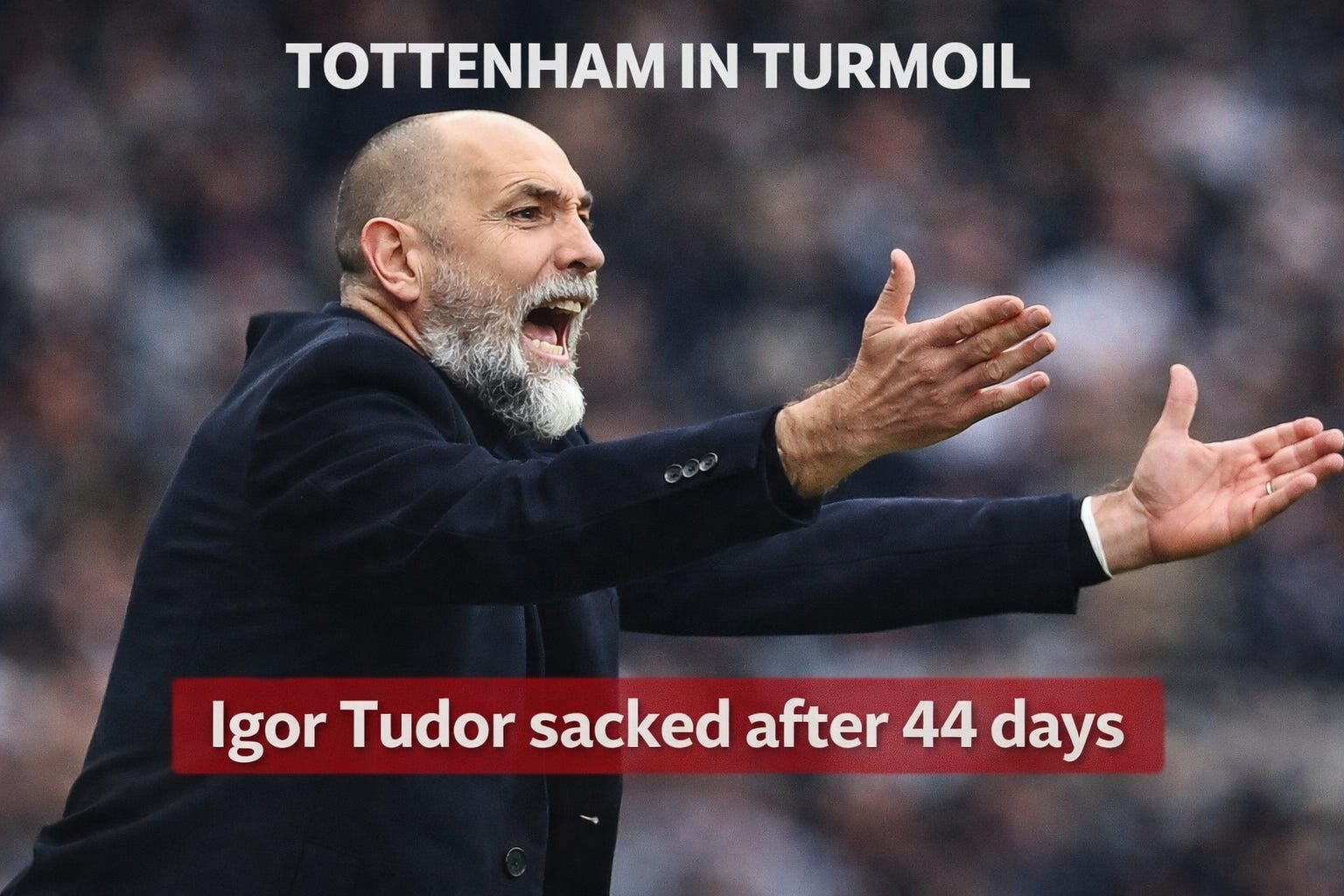
At Tottenham Hotspur, the conversation always ends in the same place:
The manager.
Sack him
Back him
Replace him
Repeat.
But that’s not where the problem is.
The Proof Is Happening Right Now
Igor Tudor lasted 44 days.
Forty-four.
Linked to another manager immediately.
Relegation talk already creeping in.
That’s not instability at the edges.
That’s instability at the core.
The Moment Everything Changed
Daniel Levy is gone.
For years, he was blamed for everything.
Too controlling
Too cautious
Too focused on business
But here’s the uncomfortable truth:
Since he left…
Things haven’t improved.
They’ve got worse.
The Line That Changes The Narrative
Spurs didn’t just lose a chairman
they lost the only person holding the system together
Before vs After
Before:
-
one central decision-maker
-
clear control (even if flawed)
-
consistent structure
Now:
-
fragmented leadership
-
reactive decisions
-
no clear direction
This isn’t evolution.
It’s a vacuum.
The Contradiction That Defines Spurs
Tottenham built one of the best business operations in football:
-
world-class stadium
-
NFL partnerships
-
global events and revenue
Off the pitch: elite.
On it: unstable.
That’s not coincidence.
That’s misalignment.
This Didn’t Start With Tudor
Look at the pattern:
-
Mauricio Pochettino → identity, progression
-
José Mourinho → control
-
Antonio Conte → pressure
-
Ange Postecoglou → identity again
-
Igor Tudor → reset
Different styles.
Same outcome.
Ange Was the Closest They Got
Ange wasn’t perfect.
Results dipped.
Injuries hit.
Form dropped.
But for once:
-
the football made sense
-
the identity matched the supporters
-
the direction felt real
And when Spurs were winning…
No one complained.
The Moment That Explains Everything
Nothing changed underneath.
Same squad
Same structure
Same weaknesses
Only one thing changed:
results
The Truth Most Clubs Avoid
Winning doesn’t fix problems
it hides them
Injuries Didn’t Break Spurs
They exposed them.
Ange’s system demanded intensity.
The squad wasn’t built for it.
-
poor depth
-
legacy recruitment issues
-
mismatched profiles
So when pressure hit…
The system failed.
The Real Diagnosis
Spurs weren’t unlucky
they were unprepared
Where It Actually Breaks
This is not just about managers.
It’s recruitment.
It’s planning.
It’s leadership.
And now — post-Levy — it’s something worse:
no one owns the whole system
The Missing Role Tottenham Still Don’t Have
This is the gap.
No one is accountable for:
-
identity
-
alignment
-
long-term direction
So everything resets.
Again.
And again.
This Is Why Spurs Need a Chief Supporter Officer
Not a fan liaison.
Not PR.
A C-suite executive with authority.
This Isn’t PR. This Is Structure.
Most clubs already have:
-
fan engagement teams
-
supporter reps
-
communications
They change nothing.
Because they sit outside power.
A CSO sits inside it.
What a Real CSO Would Do
A Chief Supporter Officer would:
-
sit at executive level
-
report directly into ownership
-
challenge decisions before they happen
-
protect long-term identity
-
stop short-term panic resets
They don’t represent noise.
They protect alignment.
What They Control That No One Else Does
-
define identity through supporter expectation
-
ensure that identity survives manager changes
-
align recruitment with long-term philosophy
-
hold leadership accountable beyond results
They don’t pick the manager.
They define the system the manager must fit.
Why This Changes Everything
Right now Spurs operate like this:
Business → world class
Football → reactive
No connection.
A CSO creates that connection.
Without it:
Every decision is temporary.
Every rebuild starts again.
Every manager inherits instability.
The Brutal Truth
Tottenham don’t know who to appoint
because they don’t know who they are
The Real Fix
Spurs don’t need another manager.
They need:
-
identity
-
structure
-
accountability
-
alignment
Across years. Not months.
Not blind patience.
Structured leadership.
Final Thought
Tottenham didn’t collapse overnight.
They drifted.
Then they removed the one person holding it together…
without replacing the system.
And until that changes:
Different manager.
Same cycle.